AI Recruiting vs Traditional Recruiting: What Actually Works?
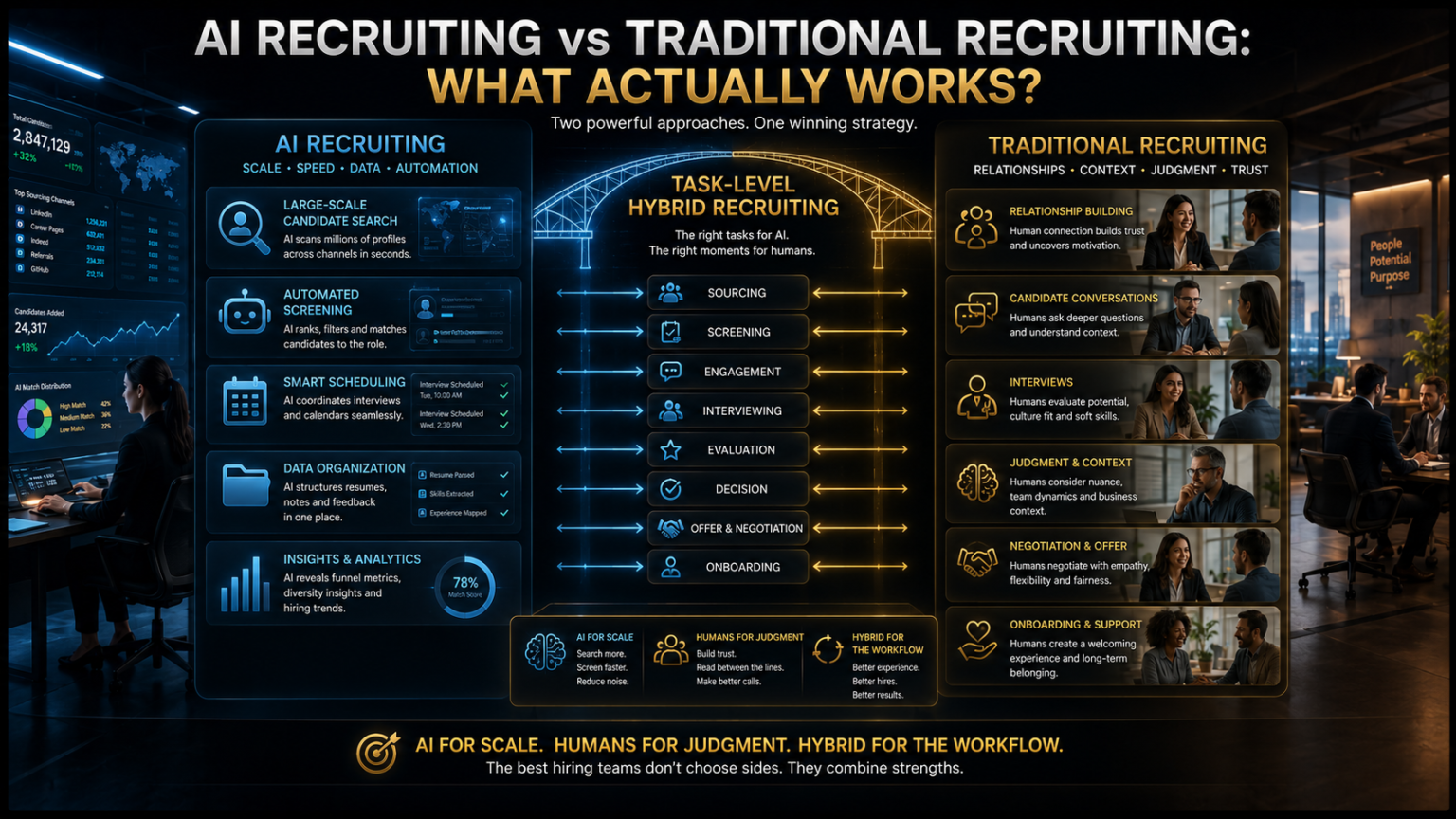
AI recruiting isn’t automatically better than traditional hiring. The right model depends on task volume, structure, consequence, ambiguity and the value of human judgment.
How AI is changing recruiting and HR, from sourcing and screening candidates to AI interviews and onboarding, and how to keep it fair.
Start here:
→ AI Recruiting vs Traditional Recruiting: What Actually Works?
→ AI in HR & Recruiting Explained: How AI Is Changing Talent Operations
→ How AI Finds and Screens Candidates (Without Bias)
→ How to Use AI for Employee Onboarding, HR Helpdesks & Policy Questions
AI recruiting isn’t automatically better than traditional hiring. The right model depends on task volume, structure, consequence, ambiguity and the value of human judgment.
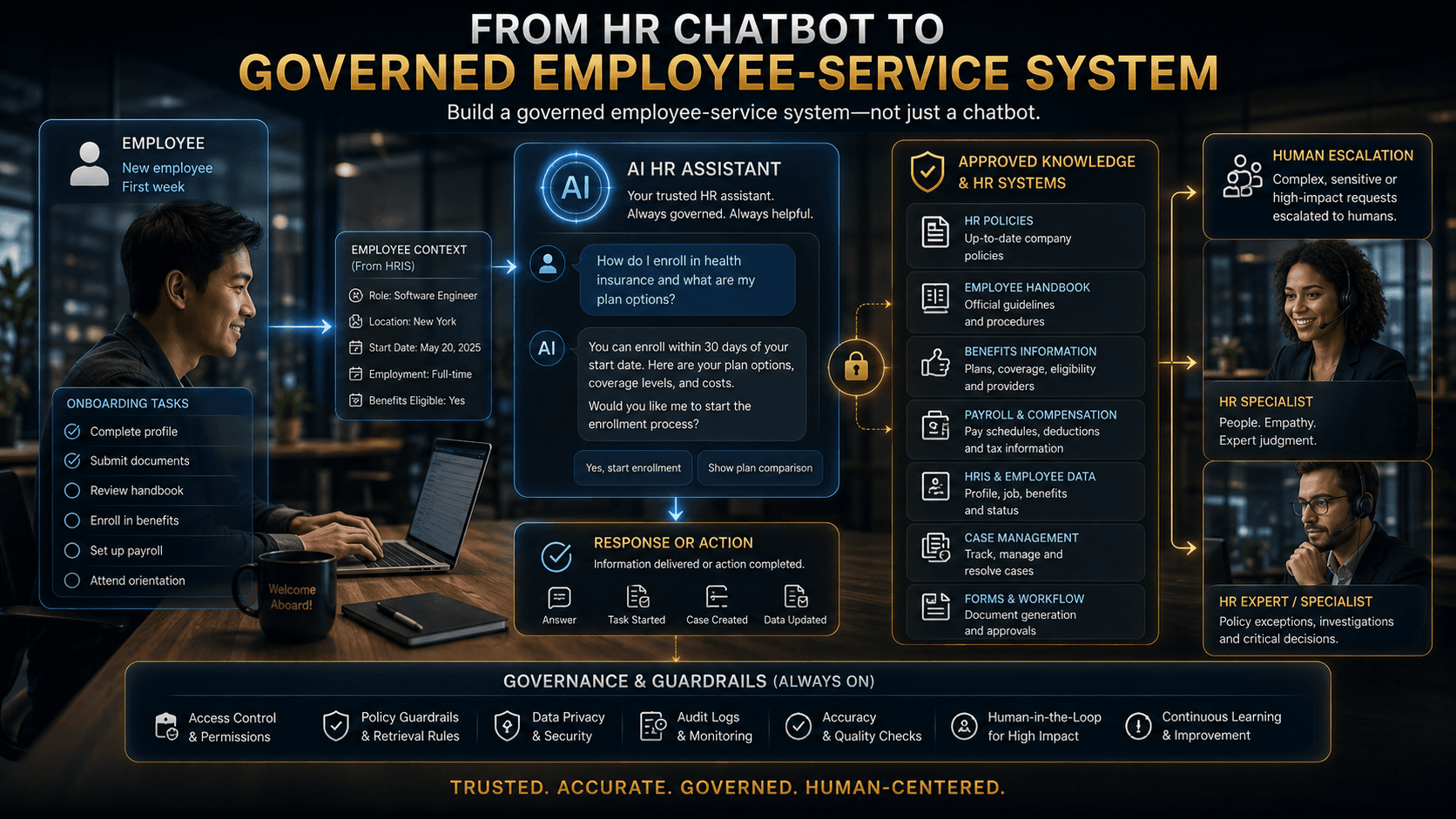
AI can guide onboarding, answer routine HR questions and automate service workflows—but sensitive employee decisions still need governed human support.
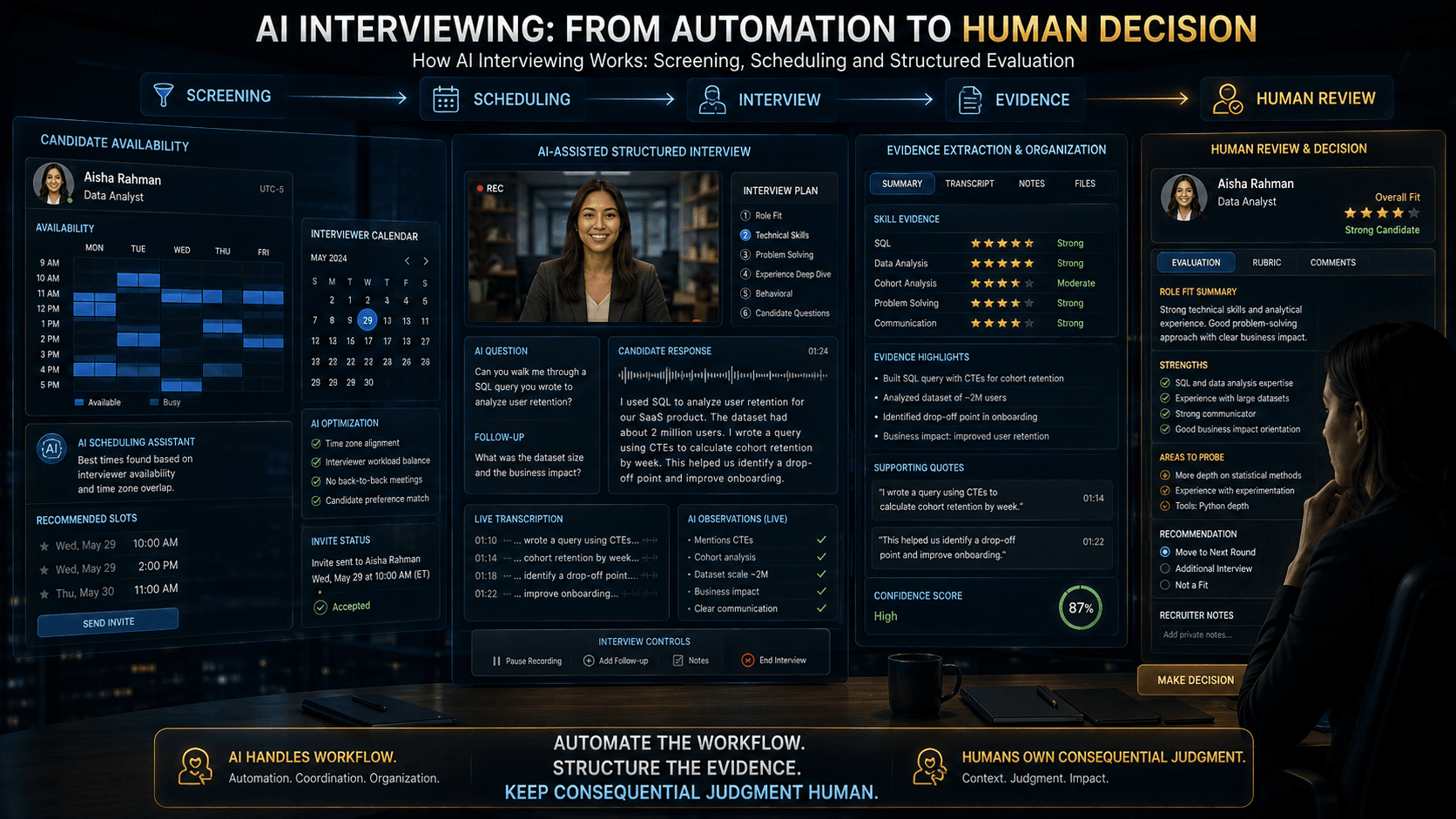
AI can automate interview scheduling, screening and evidence analysis—but structured hiring still needs transparent criteria, accessibility and meaningful human judgment.
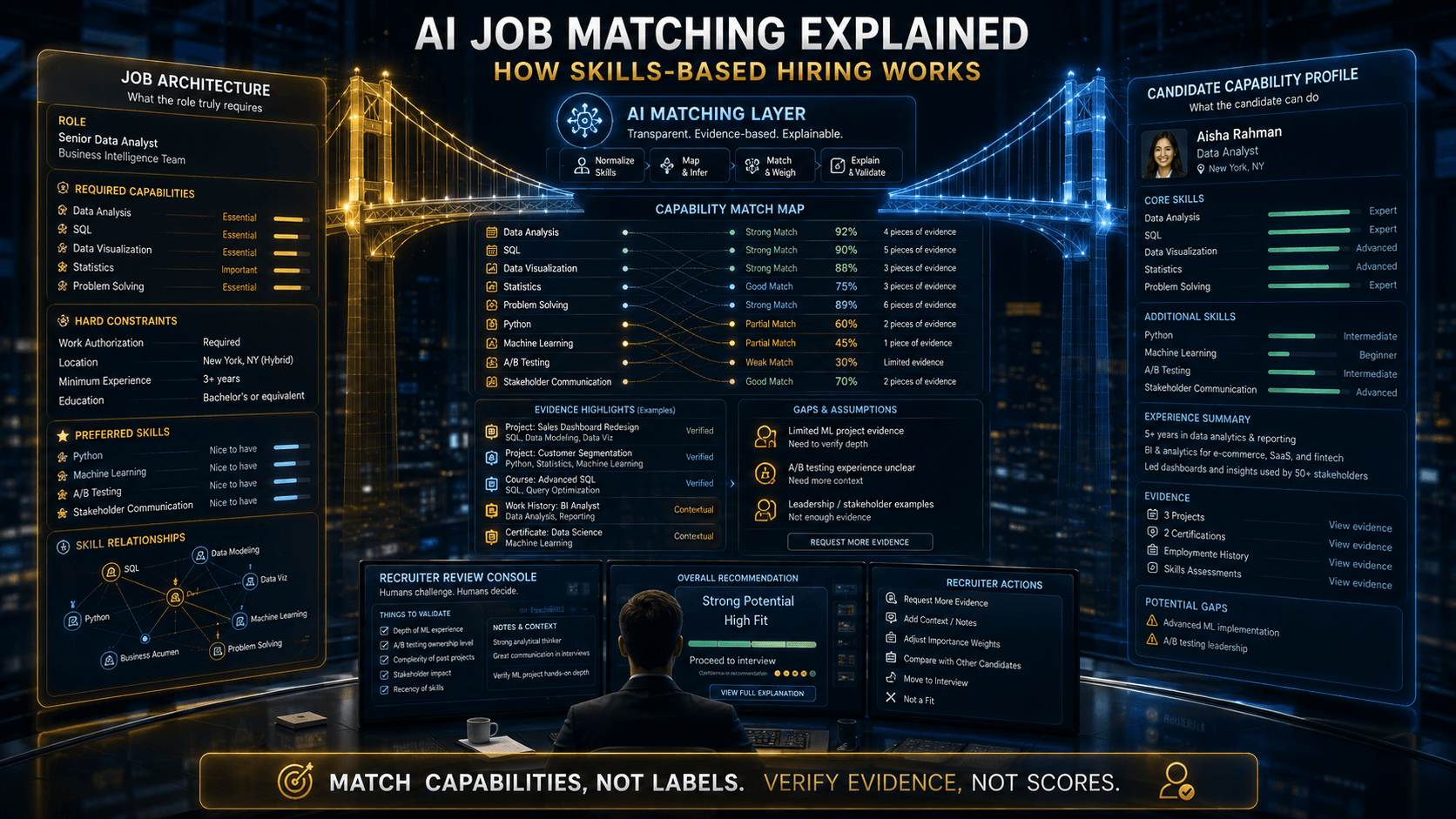
AI job matching can move hiring beyond keywords and job titles by comparing skills, experience and evidence—but a match score isn’t proof of candidate success.
See how AI actually sources and screens candidates: the evidence framework, autonomy limits, legal risks, and a 90-day rollout plan for recruiters.
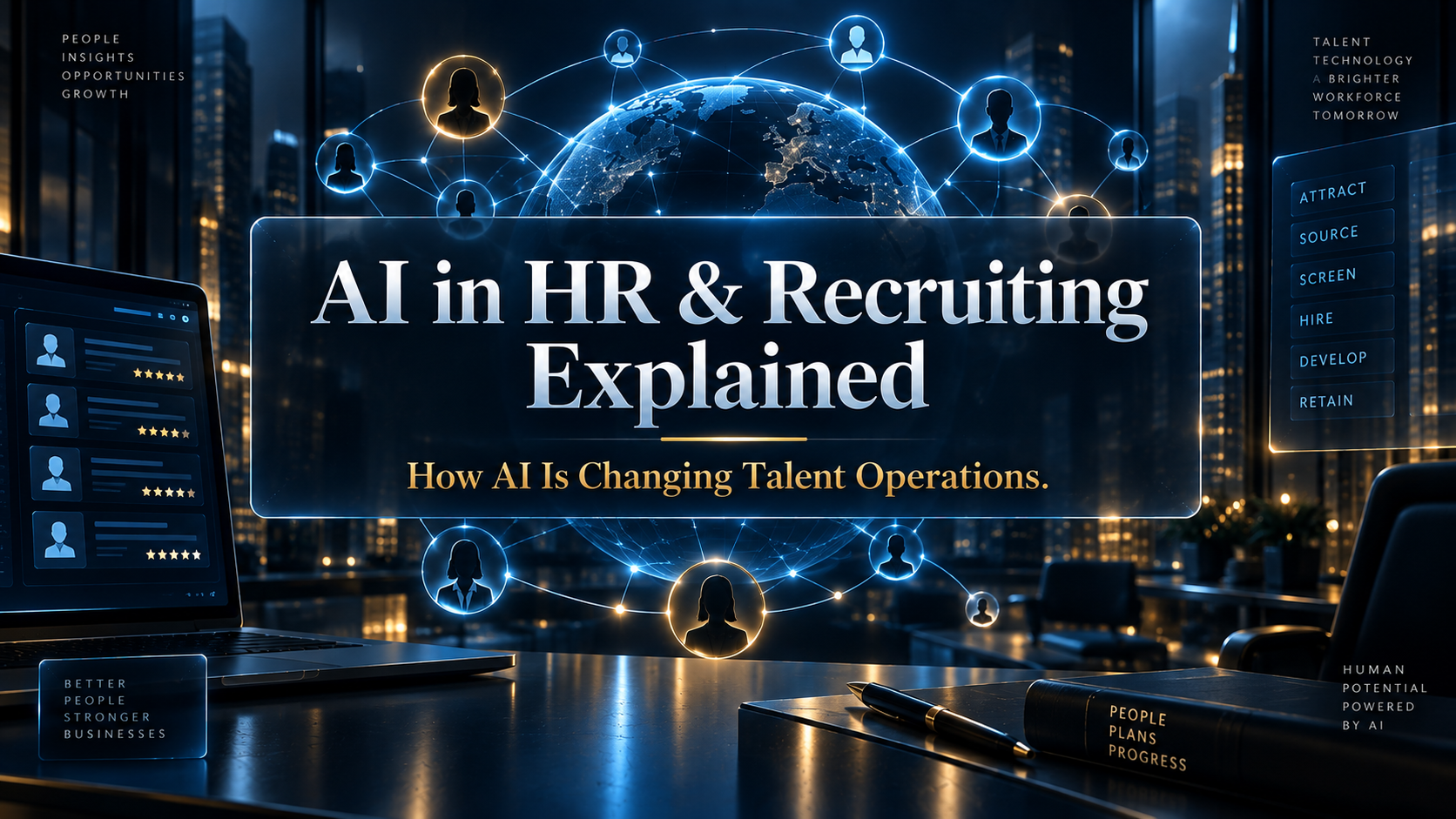
AI in HR and recruiting explained: how AI changes sourcing, screening, onboarding and workforce planning — and the governance model to do it safely.