Weav vs Chatbase: Which AI Customer Support Agent Should You Choose?
Affiliate disclosure: AI Hustle World is an affiliate partner of both products compared in this article, Weav and Chatbase. The Weav links below are affiliate links, and we may also earn a commission if you buy Chatbase through our Chatbase affiliate link on this site. Either way it costs you nothing extra. Our comparison and recommendations are based on product fit, features, pricing, limitations, and documented capabilities—not commission.
Choosing an AI customer support platform used to be relatively simple. You would compare how well each tool could answer questions from a knowledge base, embed a chatbot on your website, and hand difficult conversations to a person. That model is now outdated. Both Weav and Chatbase have moved beyond the basic “AI chatbot trained on your documentation” category, and the meaningful difference is no longer simply which product gives the better-looking answer.
The more important question is what happens after the customer asks for help. Can the system find the right information, understand the customer’s situation, perform an approved action, recognize when it has reached a boundary, transfer the case without destroying context, and give your support team the information needed to finish the job? And can you operate that system economically as conversation volume grows? That is why a simple feature-counting exercise can produce the wrong winner.
Weav is built around a support-first model that combines AI agents, a unified inbox, human escalation, internal knowledge, workflows, and actions. Chatbase has evolved into a broader customer-facing agent platform that combines agent building, procedures, integrations, multiple models, testing, observability, helpdesk capabilities, and deployment across channels including chat, email, and voice.
So, which should you choose? The answer depends on what you want the AI to become inside your support operation. Weav is the more natural fit for businesses that want a support-focused system organized around resolution and human-AI collaboration, particularly when cost and operational simplicity matter. Chatbase becomes more compelling when broader channel coverage, deeper agent configurability, multi-model control, extensive integrations, and more explicit testing and observability are central requirements. Neither is the universal winner, and treating them as interchangeable products hides the real buying decision.
Weav vs Chatbase at a Glance
The most useful way to compare these platforms is to begin with the job you want the software to perform rather than the number of buttons on the pricing page. The full Weav review has the complete verdict.
| Decision factor | Weav | Chatbase |
|---|---|---|
| Core orientation | Support-first AI resolution platform | Customer-facing AI agent platform |
| Primary strength | Resolving support conversations and combining AI with human workflows | Building, testing, deploying, and controlling configurable AI agents |
| Human handoff | Unified inbox with contextual escalation | Help Desk with centralized ticket management and human takeover |
| Knowledge | Websites, text, Q&A, files, videos, and additional sources by plan | Files, URLs, text, Q&A, Notion and other sources |
| Actions | Custom actions can call external HTTPS APIs | Procedures, actions, integrations, and custom APIs |
| Channels | Website chat and email are central to current platform documentation | Chat, email, voice, WhatsApp, API and broader channel ecosystem |
| Agent control | Tone, rules, context, specialist agents, escalation logic | Instructions, procedures, models, actions, widgets, integrations and testing |
| Testing | Playground-based testing before deployment | Simulations, regression testing, and traces |
| Helpdesk | Unified support inbox | Centralized Help Desk |
| Published entry paid price | $29/month | $40/month |
| Mid-tier published plan | $119/month for 5,000 AI messages | $150/month for 4,000 message credits |
| Higher published plan | $359/month for 20,000 AI messages | $500/month for 15,000 message credits |
| Best fit | Support-first SMB and growing support operations | Teams needing broader channels, control, or ecosystem depth |
| Biggest caution | Do not assume a support-first system automatically fits every technical or channel-heavy operation | Do not assume broader configurability automatically means better support economics |
Current published pricing and capabilities can change, so pricing should always be rechecked before publication or purchase. At the time of research, Weav lists Lite at $0, Plus at $29, Pro at $119, and Max at $359, while Chatbase lists Free at $0, Hobby at $40, Standard at $150, Pro at $500, and Enterprise as custom. But the table only tells you what each platform offers. The rest of this comparison is about why those differences matter.
Test Weav on Your Real Support Questions
Run a batch of your actual customer questions through Weav and see how many it resolves without a human handoff.
Test Weav on Your Tickets →Affiliate disclosure: We may earn a commission if you subscribe through this link, at no additional cost to you.
The Fundamental Difference: Resolution First vs Agent Control
The biggest distinction between Weav and Chatbase is not the interface. It is the philosophy behind the product. Weav presents itself as a customer-support platform designed around resolution. Its current product emphasizes specialized AI agents, smart escalation, a shared inbox, knowledge grounding, real actions, internal answers, training, reporting, and a unified workflow in which humans and AI can work together. Weav’s documentation describes agents as living directly inside the Unified Inbox, with support for website chat and email and explicit handoff rules when a human is needed. For the difference between the two approaches, read AI chatbots vs AI agents.
Chatbase approaches the problem from a different direction. Its current product overview describes a platform for building, testing, deploying, and improving customer-facing agents. Its architecture brings together a model layer, context and knowledge, APIs and integrations, customer-experience capabilities such as widgets and human-in-the-loop workflows, and enterprise security. It also emphasizes simulations, regression testing, traces, analytics, and the ability to improve the agent from actual conversations. That difference leads to an important distinction.
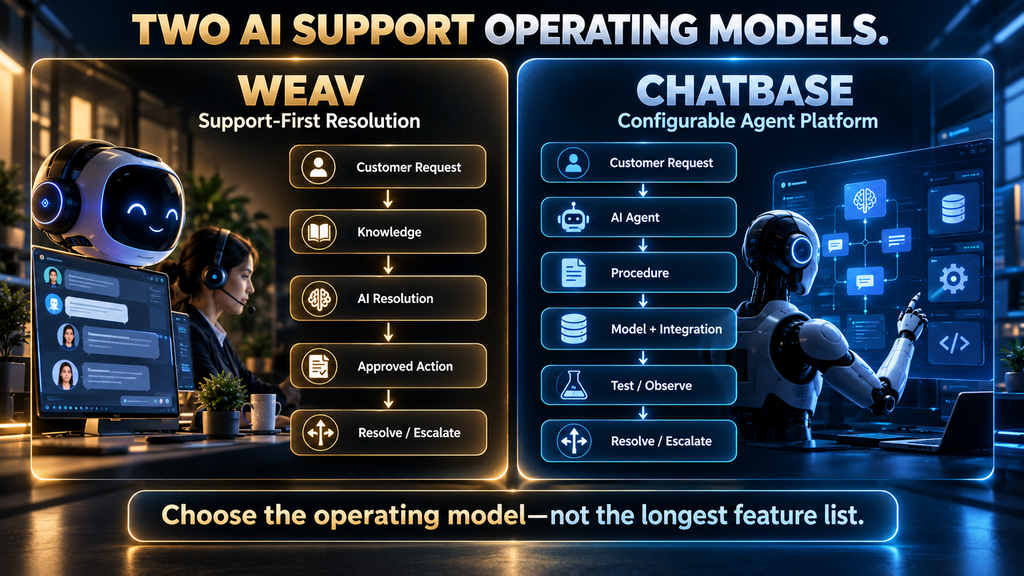
Weav is easier to understand as a support operation with AI built into it. Chatbase is easier to understand as an agent platform that can become part of a support operation. Those descriptions are intentionally not absolute. Both platforms now support more than those simple categories imply. Weav has APIs, actions, specialist agents, integrations, reporting, and knowledge workflows, while Chatbase has a Help Desk and increasingly sophisticated human-in-the-loop support functionality. The useful question, therefore, is not which philosophy is “better.” It is which philosophy better matches your business.
What Weav Is Actually Optimized For
Weav’s product is built around the idea that the AI should not stop at producing an answer if the underlying customer problem can be resolved. Weav describes its product on its own site.
Its current platform lets businesses create specialized agents, define tone and behavioral controls, connect knowledge sources, establish escalation rules, operate through a unified inbox, and use actions to interact with external systems. Weav specifically describes custom actions as a way to move from answering questions to resolving issues by calling a company’s own APIs or third-party services. That architecture matters because many customer-service interactions are not fundamentally informational. A customer asking, “What is your return policy?” needs information.
A customer asking, “Can I return order #84213?” needs information plus context. A customer asking, “My order arrived damaged. Can you start the replacement?” potentially needs information, verification, a system lookup, an action, and confirmation. The closer a support workload gets to the third case, the more valuable an agent becomes when its operating environment is designed around resolution instead of simply generating text.
Weav’s documentation illustrates that design directly. A Weav agent can be trained using website links, files, text snippets, and Q&A pairs, tested in the Playground, deployed to website chat or email, and configured with handoff rules that transfer unresolved conversations to the appropriate support team. Its Custom Actions system then extends the workflow into external systems. Weav says these actions can call a company’s HTTPS APIs so an agent can retrieve information, update subscriptions, or trigger workflows in real time.
That makes Weav particularly interesting for businesses where a large share of support requests follow repeatable workflows. Consider a subscription company. The customer asks about billing. The agent needs to identify the account, check the subscription state, explain the relevant policy, and perhaps initiate a plan change. A purely conversational assistant can answer part of that request. A resolution-oriented agent can be connected to the systems required to complete it, subject to the permissions and safeguards the business defines.
The distinction sounds subtle until support volume becomes significant. If your AI answers 10,000 questions but your human team still has to perform the actual work behind most of them, you have automated communication. If the AI can safely complete a meaningful portion of those cases and escalate the exceptions with the relevant context intact, you have begun automating the support operation itself. That is where Weav’s product philosophy is strongest.
What Chatbase Is Actually Optimized For
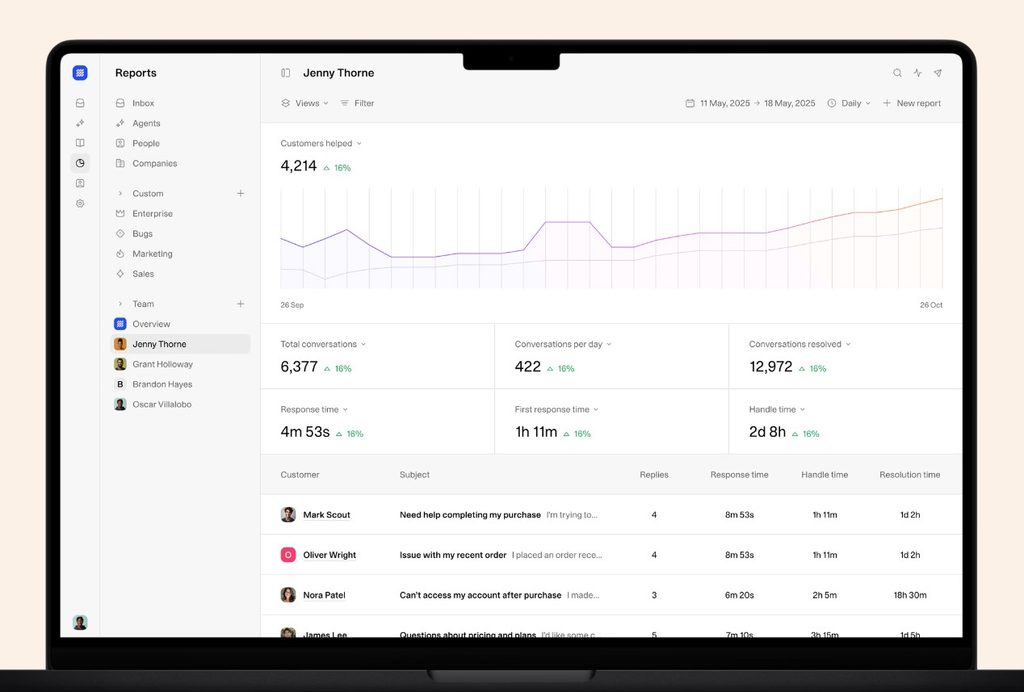
Chatbase deserves equal scrutiny because describing it as “just a chatbot builder” would materially misrepresent its current product. Chatbase now describes its platform as a complete environment for building, testing, deploying, and improving customer-facing agents. Its current product overview includes model selection, knowledge and instructions, APIs and integrations, procedures, widgets, Help Desk capabilities, analytics, simulations, regression testing, and traces. That broader architecture gives Chatbase a different kind of advantage: control.
The platform lets a business configure how an agent should behave, define procedures in natural language, introduce conditions and required steps, connect the agent to data and external systems, simulate scenarios before deployment, save important scenarios for regression testing, and inspect traces to understand what happened during a run. That can be extremely valuable in organizations where AI behavior needs to be carefully engineered rather than merely deployed.
Suppose your customer support policy says that refunds below a certain threshold can be issued automatically, larger refunds require manager approval, identity must be verified before account data is revealed, and certain edge cases must always be escalated. Chatbase’s procedures model is designed for exactly this kind of structured workflow. Its documentation describes procedures as plain-language instructions that can include conditions, lookups, required steps, action limits, and escalation rules. The testing architecture is another major differentiator.
Chatbase says businesses can simulate real scenarios, save scenarios for regression testing, rerun them after changes, and inspect traces showing which steps executed, which conditions were met, which lookups occurred, what actions were called, and when escalation happened.
That matters because production AI systems are living systems. Changing one instruction can improve one situation and accidentally damage another. The ability to maintain a set of representative customer scenarios and repeatedly test an agent against them is far more valuable than a flashy demo. For technically sophisticated teams, that control can outweigh a simpler support-first experience.
Knowledge and Training: Neither Wins by Simply Having More Sources
The old comparison formula was to count how many sources each chatbot could ingest. That is not a useful decision criterion by itself. Both platforms can work with multiple forms of business knowledge.
Weav currently documents support for website links, files and documents, text snippets, and direct Q&A pairs, with broader source options appearing at higher plan levels. Its product also emphasizes source visibility and fact-checking so internal users can see where answers are coming from. Chatbase supports a similarly broad knowledge layer. Its current product overview lists files, URLs, text, Q&A and Notion pages as sources, and the pricing structure differentiates plan capabilities and training capacity.
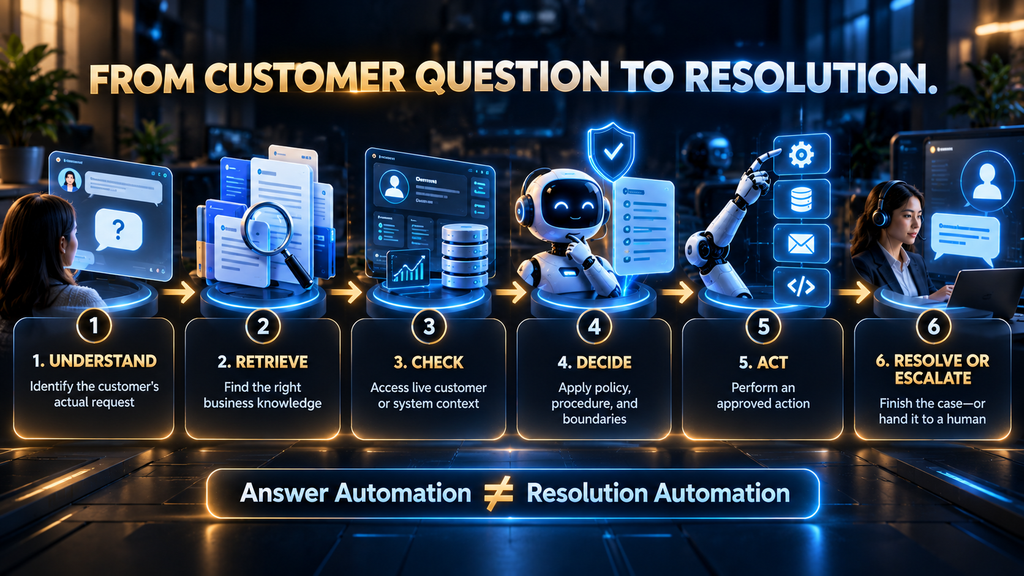
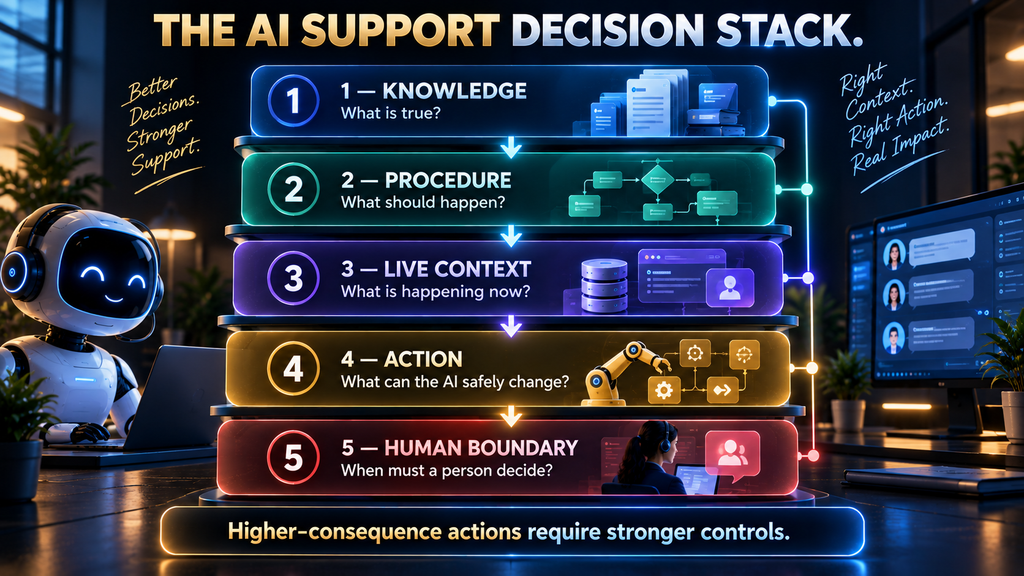
The real issue is not whether the platform can ingest your FAQ document. Almost every serious AI support platform can do that. The important question is whether your knowledge changes often, whether the AI must distinguish between policy and product information, whether answers need to be grounded in authoritative sources, and whether operational procedures need to sit beside the knowledge itself. A knowledge base tells the AI what is true. A procedure tells the AI what to do. An integration gives the AI access to what is happening right now. An action gives the AI the ability to change something.
That distinction should guide your evaluation. For example, a return-policy PDF can tell the agent that customers have 30 days to return an item. It cannot, by itself, tell the agent whether order #84213 was delivered 12 days ago. That requires access to live order data. It also cannot actually initiate the return. That requires an action or integration. This is why the strongest AI support systems are increasingly designed as combinations of knowledge, procedures, live data, actions, and human oversight.
Weav vs Chatbase for Real Actions
This is one of the most important parts of the comparison because it separates answer automation from workflow automation. Weav’s Custom Actions are explicitly designed to connect an agent to a company’s backend or third-party APIs. Weav describes use cases such as looking up orders, updating subscriptions, and triggering workflows. Chatbase also has a strong action model. Its current platform combines native integrations, custom APIs, procedures, lookups, and actions. Its procedures system is built specifically to let agents perform multi-step workflows with conditions, required steps, and defined limits.
So both platforms can move beyond static FAQ answering. The distinction is in how the capability is packaged and governed. Weav’s action model fits naturally into its support-first proposition: the customer’s issue enters the support environment, the AI retrieves what it needs, the AI performs permitted work, and a human takes over when the case crosses a defined boundary. Chatbase’s approach is more explicitly procedural: define how the agent should behave, specify the conditions and actions, test the workflow, observe the run, and improve it.
Neither model is inherently safer. Safety depends on the actual implementation, permissions, data exposure, verification requirements, escalation rules, and testing discipline. That is an important point to keep in mind. “The AI can take action” is not automatically a benefit. The AI being able to take the wrong action faster is a liability. The more consequential the action, the more the workflow should include identity checks, eligibility checks, constrained permissions, explicit boundaries, and human escalation where uncertainty matters.
Chatbase’s procedure documentation makes that explicit by describing required steps and action limits within procedures, while Weav’s documentation describes connecting custom actions to external APIs within the support workflow.
Human Handoff: The Real Test Is What Happens After AI Fails
Human handoff is frequently treated as a feature checkbox. That is a mistake. A support AI does not need to solve every case. A good system needs to know which cases it should not solve and transfer them intelligently. Our comparison of AI customer support vs human support and the guide to human-in-the-loop AI cover when people should stay involved.
Weav places this concept near the center of its architecture. Its unified inbox is designed to keep AI and human conversations in one workspace, while escalation rules can route conversations to the appropriate support team. Weav’s documentation specifically describes human handoff when a customer asks for a person or the AI cannot resolve the issue after several attempts. Chatbase has also made human oversight substantially more sophisticated. Its Help Desk is a centralized workspace for customer support tickets across channels including widget, email, WhatsApp, and API, with assignment, tracking, AI-assisted replies, and human takeover.
This creates a more interesting comparison. Weav’s strength is AI and human support in the same support-oriented workspace. Chatbase’s strength is an increasingly capable agent system connected to a centralized Help Desk and broader channel infrastructure. For a small business, Weav’s simpler support-first workflow may be the more intuitive operating model. For a team already managing multiple channels and sophisticated workflows, Chatbase’s broader ecosystem may be more valuable. In either case, you should evaluate the handoff by asking five questions.
Does the human receive the complete conversation? Does the human know what the AI already attempted? Does the human know why the AI escalated? Can the human see the customer or account context they need? Can the human complete the case without making the customer repeat the entire story? If the answer to those questions is no, “human handoff” is technically present but operationally weak.
Channels: Chatbase Has the Broader Public Footprint
This is one area where Chatbase has a clear advantage in the current product set. Chatbase’s documentation and product pages show support across chat, email, voice, WhatsApp and API-based workflows, with its Help Desk unifying multiple ticket channels. Its email support lets an AI agent automatically respond to customer emails, including configurations for custom domains and mailboxes. Its WhatsApp integration allows the agent to communicate directly through a connected WhatsApp number, with Help Desk support for managing those conversations.
Weav’s current public documentation centers strongly on website chat and email within its unified inbox. Its documentation explains that agents can operate on a website chatbot or draft automated email replies, with human handoff integrated into the same environment. That gives Chatbase an important advantage for businesses where customer support already spans several channels.
A company whose customers primarily contact it through website chat and email may not benefit enough from that breadth to matter. A company trying to build a support agent that operates across chat, email, voice, WhatsApp, or other systems may care enormously. This is one of the situations where buying the “more capable” platform can be rational even if you never use every feature today.
Integrations and Existing Business Systems
The integration question is often more important than the AI question. Your support operation may already depend on Shopify, Stripe, HubSpot, Zendesk, Intercom, Freshdesk, Gorgias, Help Scout, Zoho Desk, Odoo, or custom internal systems. The AI does not replace those systems simply because it can answer a question. Chatbase’s current platform lists a broad ecosystem of integrations and API connectivity, including systems such as Stripe, Zendesk, Salesforce, Intercom, HubSpot, Zoho Desk, Freshdesk, Help Scout, Gorgias, Odoo, Zapier, Twilio, Shopify, Slack, WhatsApp, Messenger, Instagram, Calendly and WordPress.
Weav also provides integrations, APIs, Shopify connectivity, Google Drive support at relevant plan levels, and custom actions. Its product page describes a developer-first API, while its pricing page includes custom actions and integrations that expand at higher plans. The correct question is therefore not: “Which has more integrations?” It is: “Which one connects most cleanly to the systems my support team already depends on?”
Suppose you run an e-commerce operation where orders, refunds, inventory and customer records all live across several systems. An integration you can activate immediately is worth more than five theoretical integrations you do not need. Conversely, a technical team building a highly customized customer-support architecture may value APIs and procedural control more than a polished out-of-the-box workflow. The winning platform is the one that reduces integration friction for your actual support stack.
Testing and Control: Chatbase Has a Stronger Explicit Testing Story
This is one of Chatbase’s most compelling advantages. Chatbase currently provides simulations so teams can test real customer scenarios before deployment. It also supports regression testing, allowing saved scenarios to be rerun when instructions, procedures or knowledge sources change. Its traces expose the execution path, including retrieved information, procedures, actions and escalation decisions. That is important because production support systems fail in edge cases, not polished demos. For a step-by-step build, see how to set up an AI customer support agent with Weav.
Imagine that your refund procedure works correctly for standard orders. Then you modify the policy to introduce a 14-day exception. The new logic works for the new case but accidentally breaks an existing exchange scenario. Without regression testing, you may not discover the problem until customers encounter it. A platform that lets you preserve representative conversations as test cases changes the development process. Instead of: Build → launch → discover problems → patch you can move toward: Build → simulate → test → deploy → monitor → regression-test → improve Weav provides a Playground for testing agents before deployment and encourages evaluation of accuracy, tone, formatting and knowledge coverage. That is useful, but Chatbase currently presents a more extensive explicit testing and observability framework around simulations, regression suites and traces. For teams with complex procedures or high operational risk, this difference deserves serious weight.
Pricing: Weav Has the Stronger Published Value at Growth Tiers
Price is one area where the current public numbers favor Weav, particularly once a business moves beyond the free tier. Weav currently lists: Our guide to Weav pricing breaks down the cost per resolution.
- Lite: $0/month with 20 AI messages
- Plus: $29/month with 500 AI messages
- Pro: $119/month with 5,000 AI messages
- Max: $359/month with 20,000 AI messages
Higher plans also increase teammates, training capacity, actions, integrations, helpdesk capabilities, reporting and automation. Weav lists additional AI credits at $49 per 1,000. Chatbase currently lists:
- Free: $0/month with 50 message credits
- Hobby: $40/month with 700 message credits
- Standard: $150/month with 4,000 message credits
- Pro: $500/month with 15,000 message credits
- Enterprise: custom
Chatbase’s current pricing page also lists $40 per 1,000 additional message credits, $25 per additional AI agent per month, and $99/month to remove Chatbase branding. The simple published-price comparison therefore looks like this:
| Stage | Weav | Chatbase |
|---|---|---|
| Free | $0 / 20 messages | $0 / 50 credits |
| Starter | $29 / 500 messages | $40 / 700 credits |
| Growth | $119 / 5,000 messages | $150 / 4,000 credits |
| Higher volume | $359 / 20,000 messages | $500 / 15,000 credits |
| Additional 1,000 | $49 | $40 |
At the starter level, Chatbase actually includes more usage in the free and first paid tiers. At the growth and higher-volume tiers, Weav currently publishes lower prices with larger included usage allowances. There is an important caveat here: message credits are not a perfect measure of economic value.
One conversation might consume a different amount of computational or AI resources depending on the model, workflow, number of steps, retrieval, procedures, or other product behavior. Chatbase explicitly gives users model choice, while Weav emphasizes managing model selection for different levels of complexity. You should therefore use price as part of a support-economics calculation, not as a standalone quality metric. The question to ask is: What will it cost to handle 1,000 real support situations to an acceptable outcome?
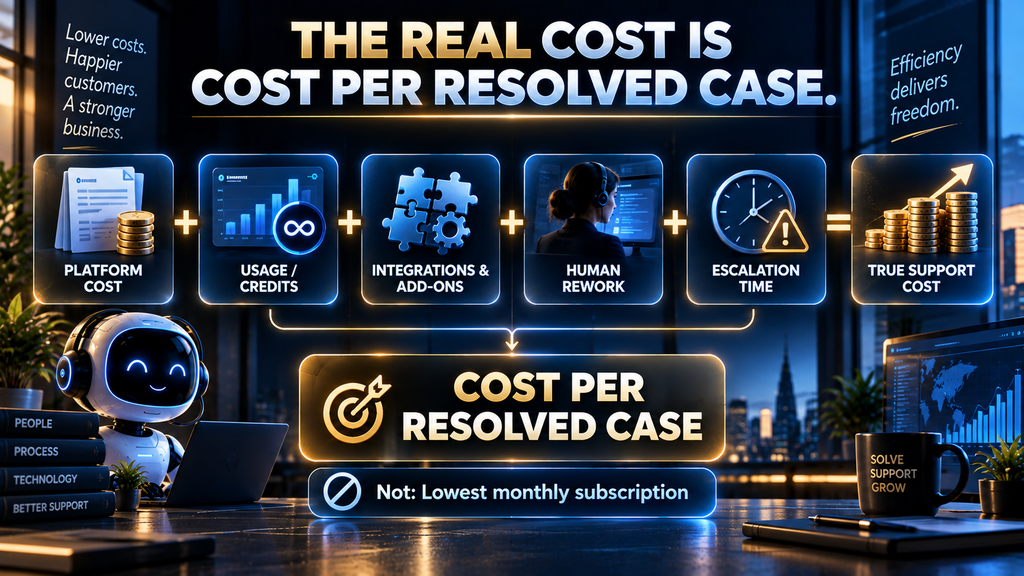
That calculation should include plan cost, overages, seats, required integrations, human labor after escalation, implementation effort, and the percentage of cases actually resolved without additional intervention. A platform costing $150/month that safely resolves far more work could be cheaper than a $50 platform that generates thousands of beautifully written but ultimately useless replies.
See What Chatbase Does With Your Content
Train Chatbase on your help articles and check how accurately it answers the questions customers ask most.
Test Chatbase on Your Docs →Affiliate disclosure: We may earn a commission if you subscribe through this link, at no additional cost to you.
Free Plans: Useful for Testing, Not a Business Strategy
Both platforms offer free tiers, but the limits matter. Weav’s Lite plan currently provides 20 AI messages per month, one teammate, one custom email, 100KB of training data and five enabled AI actions. Chatbase’s Free plan provides 50 message credits per month for one member, with limited model access, and its current pricing page says AI agents are deleted after 14 days of inactivity. That means both are primarily evaluation mechanisms rather than serious long-term operating plans. You can check current plans on the Weav pricing page, Chatbase pricing and Intercom pricing.
The right use of a free plan is not to ask, “Can I run my business on this?” The better question is: Can I put enough of my real support knowledge into the system to discover whether the architecture fits? Use actual customer questions, difficult policy cases, contradictory documentation, ambiguous wording, and scenarios that genuinely require escalation. That will tell you far more than asking a polished demo question such as “What is your refund policy?”
Which Platform Is Easier for a Small Business?
For many small businesses, the biggest constraint is not engineering capability. It is management attention. A five-person team rarely wants to become an AI infrastructure company. If your support workload is centered around website chat and email, the knowledge base is manageable, the recurring questions are clear, and you want the AI and human team working in one support environment, Weav is particularly attractive. Its product is organized around the operational support flow: create agents, train them, deploy them, route difficult cases, work inside the inbox, and connect actions when necessary.
Chatbase can absolutely serve a small business, and its no-code positioning lowers the entry barrier. But the breadth of its agent-building system becomes especially valuable when you actually need that breadth. A small company should not select more complexity simply because more complexity exists. The better rule is: Choose the platform whose capabilities you are likely to use in the next 12 months, not the platform whose feature list looks impressive on day one.
Which Platform Is Better for a Growing Support Team?
This becomes a closer decision. As support volume increases, three things change. First, more customer cases become repetitive enough for automation. Second, more exceptions appear. Third, the consequences of bad automation become more expensive. At this stage, Weav’s unified inbox, specialized agents, smart escalation, support workflows and published pricing structure make a strong case for teams that want the support function itself to remain the center of gravity.
Chatbase becomes particularly attractive when growth also brings more channels, more integrations, more complex workflows, and a stronger need to test and govern the agent. Its Help Desk provides a centralized support environment, while its procedures and testing architecture provide more explicit tools for managing increasingly complex behavior. At this stage, the decision should probably be made using an operational scorecard rather than intuition. Score each platform against: Resolution capability
How many real customer problems can it safely complete rather than merely answer? Escalation quality How intelligently does it recognize when a human is needed? System connectivity Can it connect to the systems where customer truth actually lives? Testing Can you continuously test the behaviors that matter? Cost behavior What happens to the economics as volume increases? Operational complexity Who will own the platform internally? That scorecard is more useful than a 40-row feature comparison.
Which Platform Is Better for Technical or Sophisticated Teams?
This is where Chatbase has a strong argument. Technical teams often value control because they can use it. If you need multiple procedures, model choice, integrations, custom APIs, detailed testing, traces, and broad channel deployment, Chatbase’s current agent platform is designed around precisely that environment. That does not mean Weav lacks technical capability. Weav provides a developer-first API and custom actions, allowing organizations to connect the platform to their own backend systems and workflows.
The difference is more about where complexity lives. With Weav, the support operation is strongly integrated into the product’s core experience. With Chatbase, a sophisticated team can construct a more explicitly engineered agent environment around procedures, models, integrations and testing. If your team has the ability and willingness to manage that complexity, Chatbase’s additional control can be a genuine advantage.
Where Weav Wins
Weav has the stronger case when the fundamental requirement is customer-support resolution inside a unified operating environment. Its most convincing advantages are not individual features. They work together. Specialized AI agents define roles. Knowledge grounding provides business context. Actions connect the AI to systems. Smart escalation sets boundaries. The unified inbox keeps AI and human conversations together. Reporting shows where support flows are working or breaking. That combination makes sense for a business whose central problem is:
“How do we handle more customer support without growing the human team at the same rate?” Weav’s current product directly frames itself around that outcome and emphasizes support resolution, shared human-AI workflows, and actions rather than conversation alone. Weav also has the stronger published price/value story at its growth tiers, assuming the included message allowances align with your actual support workload. There is another subtle advantage: conceptual simplicity. A small business owner may understand “AI support agents plus unified inbox plus smart escalation” faster than a platform composed of models, procedures, integrations, widgets, traces, simulations and regression testing. That simplicity can be a feature.
Where Chatbase Wins
Chatbase’s strongest territory is breadth plus control. The platform currently offers a broader public channel footprint, sophisticated procedures, a multi-model environment, explicit simulation and regression testing, observability, extensive integrations, and a centralized Help Desk.
Its current security and compliance positioning is also significant for organizations with more demanding requirements. Chatbase publicly lists GDPR and SOC 2 Type II compliance, and its Enterprise offering includes capabilities such as SSO, audit logs, custom roles and permissions, SLAs, and HIPAA eligibility. Chatbase also says it is trusted by more than 10,000 businesses, although company adoption claims should be treated as vendor-reported context rather than evidence that the platform is automatically better for every business.
The most important advantage, however, is configurability. If you want to tell your agent:
- verify identity before exposing account data;
- use procedure A for standard returns;
- use procedure B for exceptions;
- require approval above a defined threshold;
- test all important scenarios after every change;
- inspect the trace when something behaves unexpectedly;
Chatbase’s current product architecture is unusually aligned with that style of operation.
Weav vs Chatbase: Real-World Support Scenarios
The most useful way to make the decision is to look at actual customer situations.
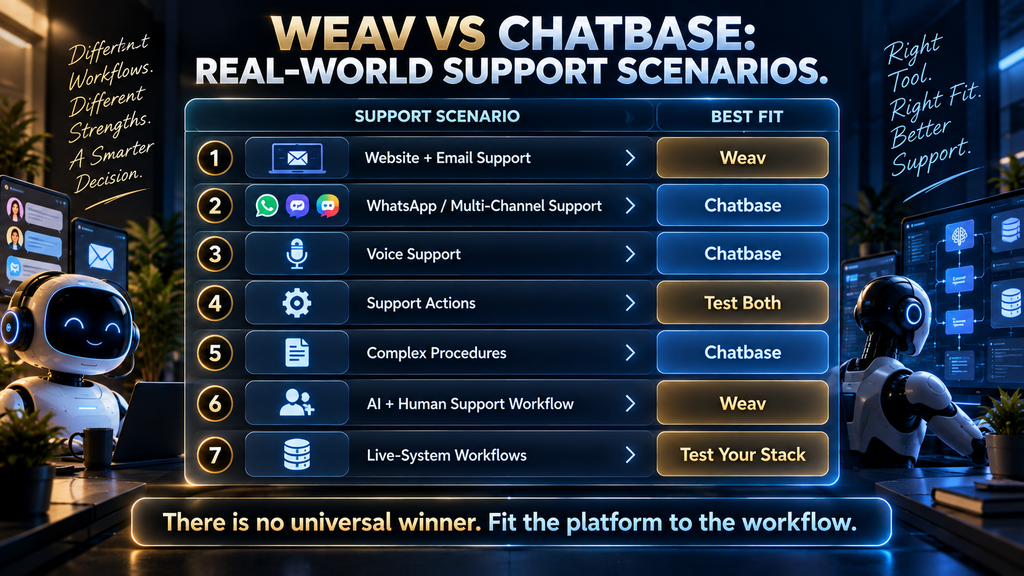
Scenario 1: “Where is my order?”. This is a relatively straightforward support problem. The AI needs accurate policy and order information. Both platforms can be connected to the knowledge and system layers required for a workflow like this, depending on the integrations and configuration you choose. Weav explicitly supports custom actions for live system lookups, while Chatbase supports procedures, integrations and custom APIs. Result: Close. Choose based on which platform integrates more cleanly with your commerce stack.
Scenario 2: “Can I cancel my subscription?”. This is more complex because the answer may depend on timing, plan type, billing status, or policy. Here, action capability matters more than generative fluency. Result: Both can be strong. Weav has a natural support-resolution workflow; Chatbase has a strong procedure model for conditional logic and controlled actions.
Scenario 3: “I want a refund, but I’m outside the normal return window.”. This is precisely where guardrails matter. The AI should not merely answer confidently. It should identify the exception, apply the correct policy, and possibly escalate. Chatbase’s procedures are explicitly designed around conditions, required steps, limits and escalation. Weav’s escalation and action model can also support controlled workflows. Result: Chatbase gets an edge if detailed procedural governance is the central requirement.
Scenario 4: “I need someone to help me right now.”. This is where the quality of handoff matters. Weav’s unified inbox and contextual escalation are central to its product design. Chatbase’s Help Desk now provides centralized ticket management and human takeover across multiple channels. Result: Weav has the stronger support-first feel; Chatbase has the stronger broader-channel ticketing story.
Scenario 5: The same support policy changes every month. This becomes a maintenance problem. Chatbase’s procedure and regression-testing architecture is especially interesting because teams can update procedures and rerun saved scenarios to check whether behavior changed unexpectedly. Weav’s automatic retraining on higher plans and source-based knowledge workflow can simplify ongoing content maintenance. Result: Chatbase has an edge for procedural governance; Weav remains attractive for simpler knowledge-driven support operations.
Scenario 6: Support happens across chat, email, voice and WhatsApp. Now channel coverage becomes a strategic factor rather than a minor convenience. Result: Chatbase. Its current product explicitly supports a broader cross-channel environment, including voice and WhatsApp. Scenario 7: Your business mostly handles website chat and email and wants humans and AI in the same support environment. Result: Weav is likely the more natural fit. Its current documentation is built around exactly this operational pattern.
The Cost of Getting the Decision Wrong
There is a deeper issue that pricing tables rarely capture: switching cost. Imagine spending three months building knowledge sources, actions, procedures, integrations, escalation rules and agent behavior around one platform. If you later discover that your chosen product cannot support a critical channel or workflow, the real cost is not another subscription fee. It is:
- configuration time;
- engineering time;
- staff training;
- support disruption;
- migration work;
- lost confidence in automation.
That means platform selection should be driven by your future operating requirements, not only today’s support volume. A business with 500 monthly support conversations may think voice support is irrelevant today. If the company already has plans to expand phone-based support next year, choosing an architecture that handles only the current environment could create unnecessary migration pressure. Conversely, a small business with no plans for voice, WhatsApp, or complex multi-system orchestration should not pay for complexity it does not need simply because a competitor advertises it.
The best platform is not the one with the highest theoretical ceiling. It is the one whose ceiling and operating model match your trajectory.
The Biggest Mistake Buyers Make: Comparing AI Quality Instead of System Quality
AI demonstrations encourage the wrong behavior. Ask both tools: “What is your return policy?” They may both produce excellent answers. That tells you almost nothing. A real support evaluation should include cases where:
- the question is ambiguous;
- the customer provides incomplete information;
- the knowledge base contains exceptions;
- the request requires live customer data;
- the answer depends on a business rule;
- an action is required;
- the customer’s request is outside policy;
- the customer becomes frustrated;
- the AI should escalate;
- the support team must finish the case.
That is the real system. Weav itself has argued that AI-platform evaluation should use real customer tickets rather than polished demo questions and recommends assessing training data, resolution quality, escalation, pricing behavior at scale, and time to launch. That is a useful principle regardless of which vendor you eventually choose. The platform that wins your demo is not necessarily the platform that wins your support operation.
A Better Way to Test Weav and Chatbase Before Buying
Run the same evaluation set through both platforms. Start with 25 to 50 real support scenarios drawn from your business. Do not clean up the wording. Keep the typos, abbreviations, incomplete sentences, emotional customers, vague questions, unusual cases and contradictory details. Then score each platform on five dimensions. For the basics, see how AI chatbots work and AI customer service explained.
- 1. Accuracy. Did it provide information that was actually supported by your business sources?
- 2. Resolution. Did it solve the underlying customer problem or merely provide an answer?
- 3. Escalation. Did it know when to involve a human?
- 4. Operational continuity. Did the human receive sufficient context to finish the case efficiently?
5. Economics. How much would the resulting workflow cost at your actual volume? That last metric should include the labor required to finish escalated cases. A supposedly “90% automated” system that leaves humans with the hardest 10% of cases may be excellent. A system with “95% automation” that occasionally creates expensive mistakes may be worse. Automation rate is therefore not a sufficient KPI. The better measurement is: Resolved without human intervention + correctly escalated with usable context + acceptable customer outcome.
What Should You Measure After Launch?
Your evaluation should continue after deployment. At minimum, watch: Resolution rate How often is the issue actually resolved? Escalation rate How often does the AI need a person? Re-contact rate How often does a customer come back because the first interaction did not solve the problem? Human handling time How long does a support employee spend after escalation? Customer satisfaction Are customers happier or more frustrated? Action failure rate How often does a workflow fail after the AI attempts to take action?
Knowledge-gap frequency What questions repeatedly expose missing information? Cost per resolved case This is the number that should eventually matter most. A low AI subscription price is meaningless if the system creates additional human work. Likewise, a more expensive platform can be economically attractive if it resolves substantially more work without degrading customer outcomes.
Security and Governance
Security should become more important as the agent moves from answering questions to taking actions. Weav publicly states GDPR and CCPA compliance and describes a security model around its customer-support environment. Chatbase publicly lists GDPR and SOC 2 Type II compliance, encryption, role-based access, domain allowlists and other controls. Its Enterprise offering adds capabilities such as SSO, audit logs, custom roles and permissions, and HIPAA eligibility. Chatbase also announced HIPAA compliance for Enterprise customers in May 2026, with a Business Associate Agreement and Zero Data Retention enabled for eligible HIPAA environments.
The practical lesson is not that “Chatbase is secure and Weav is not.” That would be an unsupported conclusion. The right lesson is that your compliance requirement should be mapped to the exact plan, data flow, integrations and contractual terms you will actually use. Security claims on a marketing page are only the starting point. Businesses handling sensitive information should review the current documentation, security materials, data-processing terms, retention policies, subprocessors, access controls and contractual commitments before deployment.
Who Should Choose Weav?
Weav is the stronger candidate when your business looks something like this: You have a meaningful volume of repetitive customer support. Most conversations happen through channels that Weav already supports well for your use case. See where it sits among the best AI customer service tools.
You want AI and human support operating in one environment. You care about resolving support issues rather than simply deflecting questions. You want the AI to connect to systems and perform approved actions. You want a lower published entry price and stronger apparent message allowance at the current growth tiers. You would rather operate a support-focused system than manage a highly configurable agent stack. You want to expand automation without turning your support team into a software engineering function. Those conditions do not make Weav universally better. They make its product architecture particularly aligned with a specific class of business.
Who Should Choose Chatbase?
Chatbase becomes the stronger candidate when your priorities look different. You need broader multi-channel deployment. You want voice as part of the customer-agent experience. You already operate across several customer-support systems. You want strong model flexibility. You need sophisticated procedures with conditions, actions and explicit limits. You want simulations, regression testing and traces as core parts of your AI operating process. You have technical resources capable of using that flexibility. You have more demanding governance, compliance or enterprise-control requirements. Chatbase’s current feature set is particularly well aligned with those needs.
Weav vs Chatbase: The Final Decision
The comparison becomes much clearer when the decision is reduced to the operating model. Our Weav vs Intercom Fin comparison covers the enterprise-scale option.
| Your priority | Better starting point |
|---|---|
| Support-first AI workflow | Weav |
| Unified AI + human support environment | Weav |
| Strong published price/value at growth tiers | Weav |
| Website chat + email-focused operation | Weav |
| AI connected to support actions and workflows | Weav or Chatbase — test your actual workflow |
| Broad channel coverage | Chatbase |
| Voice support | Chatbase |
| Extensive model choice | Chatbase |
| Advanced procedural control | Chatbase |
| Regression testing and trace-based observability | Chatbase |
| Large integration ecosystem | Chatbase |
| Enterprise governance requirements | Chatbase, subject to plan and contractual fit |
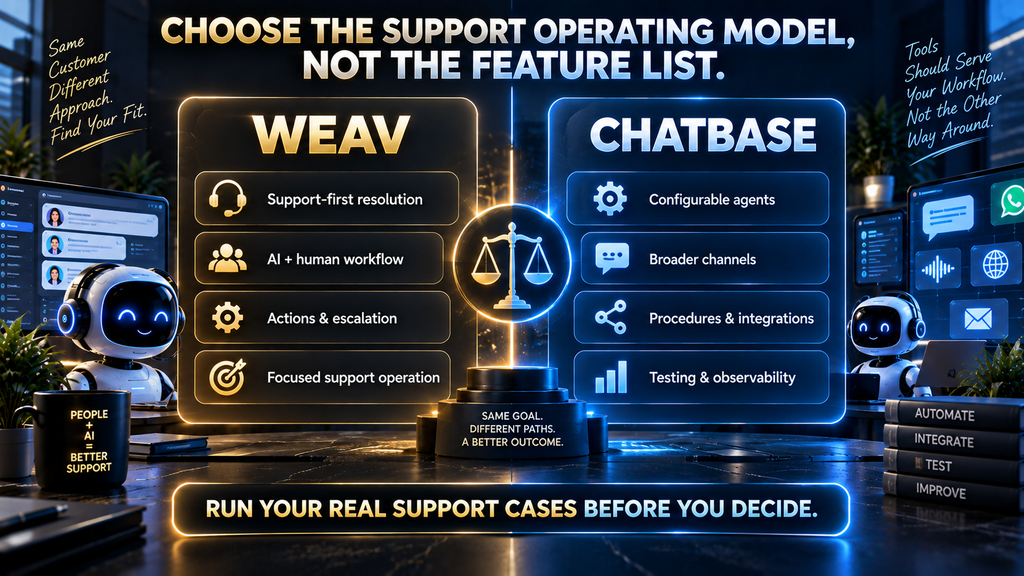
The best strategic distinction is this: Choose Weav when you want to make customer support more autonomous without making the support operation more complicated. Choose Chatbase when you want to build a more configurable customer-facing AI system and have the operational or technical maturity to take advantage of that control. There is no honest reason to claim that one product wins every category. Weav has a compelling advantage in support-first workflow design, human-AI collaboration, actions, and current published pricing economics. Chatbase has a compelling advantage in channel breadth, agent configurability, model flexibility, procedural control, testing, observability, and ecosystem breadth.
The Real Decision: Don’t Buy an AI Agent. Buy a Better Support System.
The category is moving quickly, and the most important shift is happening underneath the marketing language. A customer-support AI is no longer valuable simply because it can produce a convincing answer.
The valuable system is the one that can identify what the customer needs, find the right information, use live systems when necessary, execute approved work, recognize its own boundaries, and hand the case to a person without losing the context that has already been created. That is why the Weav-versus-Chatbase decision should ultimately be made on resolution architecture, not feature quantity.
Weav’s support-first approach makes it especially compelling for businesses that want to automate recurring support work while keeping AI and people inside the same workflow. Chatbase’s broader agent platform makes it especially compelling for businesses that want more control over models, procedures, channels, integrations, testing, and observability. The smartest buying process is therefore not to ask which brand sounds more advanced. Take your real support conversations. Give both platforms the same cases. Test the difficult ones. Measure what gets resolved. Measure what gets escalated. Measure what humans have to repair. Then compare the economics of the outcomes. Because the platform that writes the best answer is not necessarily the platform that builds the best support operation.
Final Thoughts
Weav and Chatbase are both serious AI customer-support platforms, but they are not identical answers to the same problem. Weav’s strongest proposition is operational: put AI, knowledge, actions and humans into a support environment designed around resolution. Chatbase’s strongest proposition is architectural: give teams a flexible environment for building customer-facing agents with broader channels, integrations, procedures, model choice, testing and observability. That means the decision should start with your support model, not the vendor’s marketing language.
If your objective is to automate a large amount of recurring support work while keeping the human team tightly connected to the AI workflow, Weav deserves serious consideration. If your objective is to build a broader, highly configurable AI-agent system across channels and business workflows, Chatbase deserves equally serious consideration. The important thing is to stop asking which AI is “smarter” in the abstract. Ask which system can resolve more of your customers’ real problems, safely, economically, and with less human rework.
That is the comparison that actually matters.
Decide Which Agent Fits Your Support Workflow
Compare resolution handling, control and pricing against your ticket volume before you choose either platform.
Review Weav Plans →Affiliate disclosure: We may earn a commission if you subscribe through this link, at no additional cost to you.
Frequently Asked Questions
Is Weav better than Chatbase?
Neither is universally better. Weav is more naturally aligned with support-first operations centered on AI resolution, human escalation, and a unified support workflow, while Chatbase is particularly strong for broader channel coverage, configurability, procedures, model choice, testing, observability, and integrations.
Is Chatbase just a chatbot builder?
No. That description is outdated. Chatbase’s current platform includes customer-facing AI agents, procedures, actions, integrations, Help Desk functionality, multiple channels, simulations, regression testing, traces, analytics and enterprise capabilities.
Does Weav support human handoff?
Yes. Weav’s current documentation describes configurable handoff rules that can transfer conversations to a human support team when a customer requests a person or the agent cannot resolve the issue. The platform’s unified inbox is designed to keep AI and human conversations within the same support environment. Plan data for other tools is in our AI Tool Pricing Database.
Does Chatbase support human agents?
Yes. Chatbase’s Help Desk provides a centralized workspace for customer tickets, including human assignment, AI-assisted replies, and takeover across supported channels.
Can Weav take actions, or does it only answer questions?
Weav supports custom actions that can call external HTTPS APIs, allowing agents to retrieve live information, update subscriptions, and trigger workflows.
Can Chatbase take actions?
Yes. Chatbase supports procedures, lookups, actions, integrations and custom APIs. Its procedures system is designed for workflows with conditions, required steps, action limits, and escalation rules.
Which is cheaper, Weav or Chatbase?
At the current published list prices, Weav is cheaper at the first paid tier and at its published growth and higher-volume tiers, while Chatbase’s free tier includes more message credits and its additional-credit rate is currently lower. Weav lists Plus at $29, Pro at $119 and Max at $359, while Chatbase lists Hobby at $40, Standard at $150 and Pro at $500.
Which has more integrations?
Chatbase currently publishes a broader integration ecosystem, including numerous helpdesk, CRM, commerce, messaging and communication platforms. Weav also supports integrations, custom actions and APIs, so the correct choice depends on which systems your business actually needs to connect.
Which is better for voice support?
Chatbase has the stronger current public offering here. Its current Standard plan includes voice and telephony, and the product is positioned across chat, email and voice.
Which is better for a small business?
Weav is likely the better starting point when the business primarily needs support automation across website chat and email, wants AI and human support in one environment, and values a support-focused workflow. Chatbase may be the better choice when the small business already needs broader channels or more advanced agent configuration.
Which should I choose if I am still unsure?
Do not choose based on the demo. Take 25 to 50 real customer-support cases, run the same scenarios through both platforms, and score accuracy, resolution, escalation, human handling time and total cost per resolved case. The platform that performs best on your actual support workload is more relevant than the platform with the longer feature list.
Written by
Muntasir Ahmad Chowdhury
Founder, AI Hustle World
Muntasir Ahmad Chowdhury is the Founder of AI Hustle World, an independent publication dedicated to making Artificial Intelligence practical, trustworthy, and easy to understand. He researches AI tools, automation, customer service, productivity, and real-world business applications, helping readers make smarter technology decisions through research-driven, experience-backed content.
Expertise:
AI Tools • AI Automation • AI Customer Service • AI Productivity • Generative AI • AI Workflows
Get Smarter With AI
Enjoyed this guide? Get practical AI tools, tutorials, and honest reviews delivered to your inbox.
3 thoughts on “Weav vs Chatbase: Which AI Customer Support Agent Should You Choose?”