Skip to content

AI Hustle World

  • Home
  • Start Here
  • AI Tools
  • AI Explained
  • AI Guides
  • AI Productivity
  • AI Business

AI Explained

Plain-English explanations of how AI works under the hood, from large language models and AI agents to RAG, fine-tuning and running models locally.

Start here:
→ What Is an AI Agent? A Beginner’s Guide to How Autonomous AI Works
→ What Is a Large Language Model (LLM)? How LLMs Really Work
→ Complete Guide to Retrieval-Augmented Generation (RAG)
→ How AI Agents Use Tools to Complete Real Tasks

How to Clean Background Noise with AI Audio Tools
October 7, 2026September 11, 2026 by Muntasir Ahmad Chowdhury
How to clean background noise with AI audio tools

Learn how to clean background noise with AI, why it differs from a noise gate, which tool fits which noise type, and where it still goes wrong.
Categories AI Explained

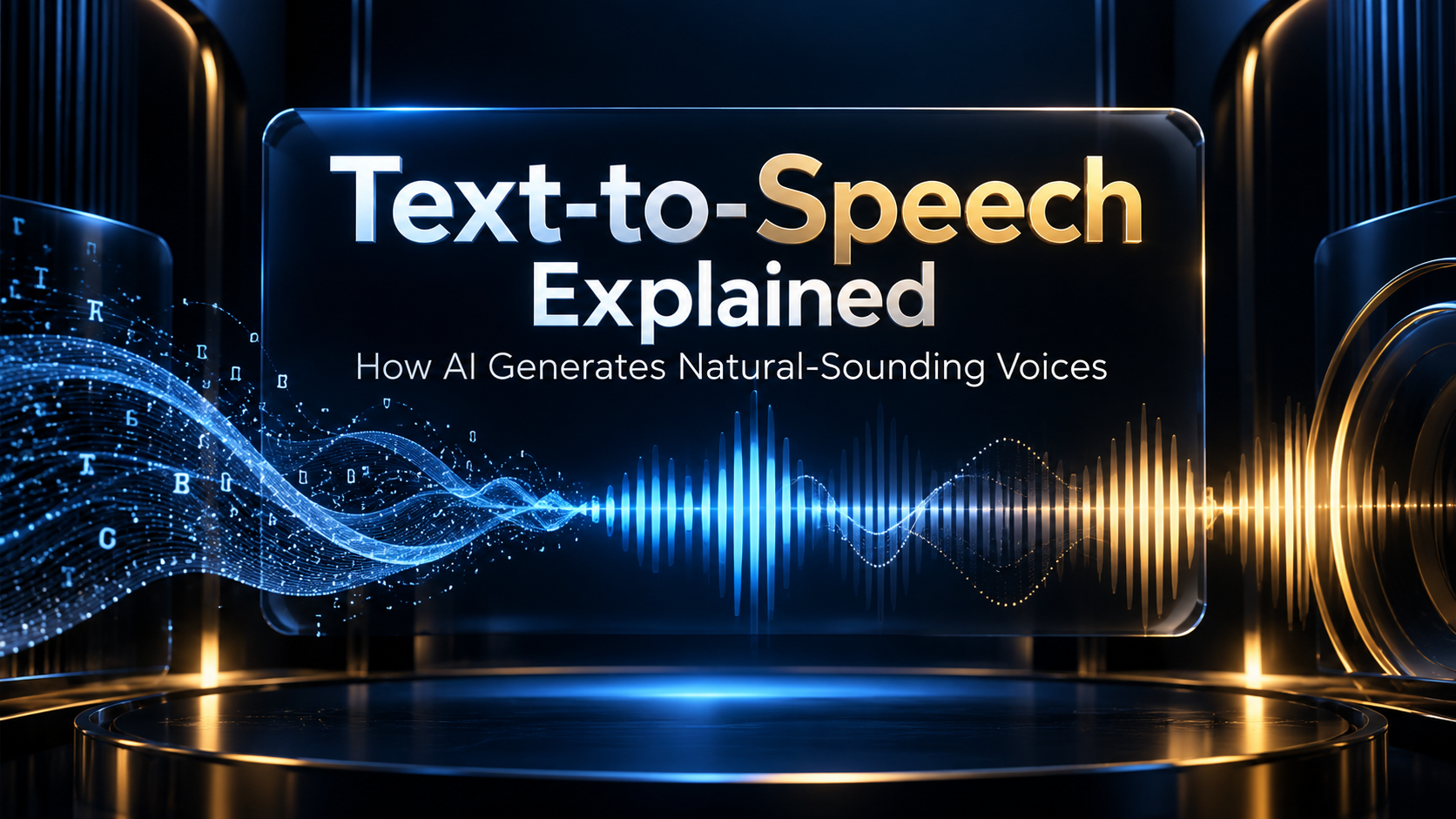
Text-to-Speech Explained: How AI Generates Natural-Sounding Voices

October 13, 2026September 10, 2026 by Muntasir Ahmad Chowdhury
Text-to-Speech Explained: How AI Generates Natural-Sounding Voices

A practical explainer on how AI text-to-speech actually works, from the three-stage neural pipeline to real 2026 benchmarks, provider comparisons, and where synthetic voices still fail.
Categories AI Explained

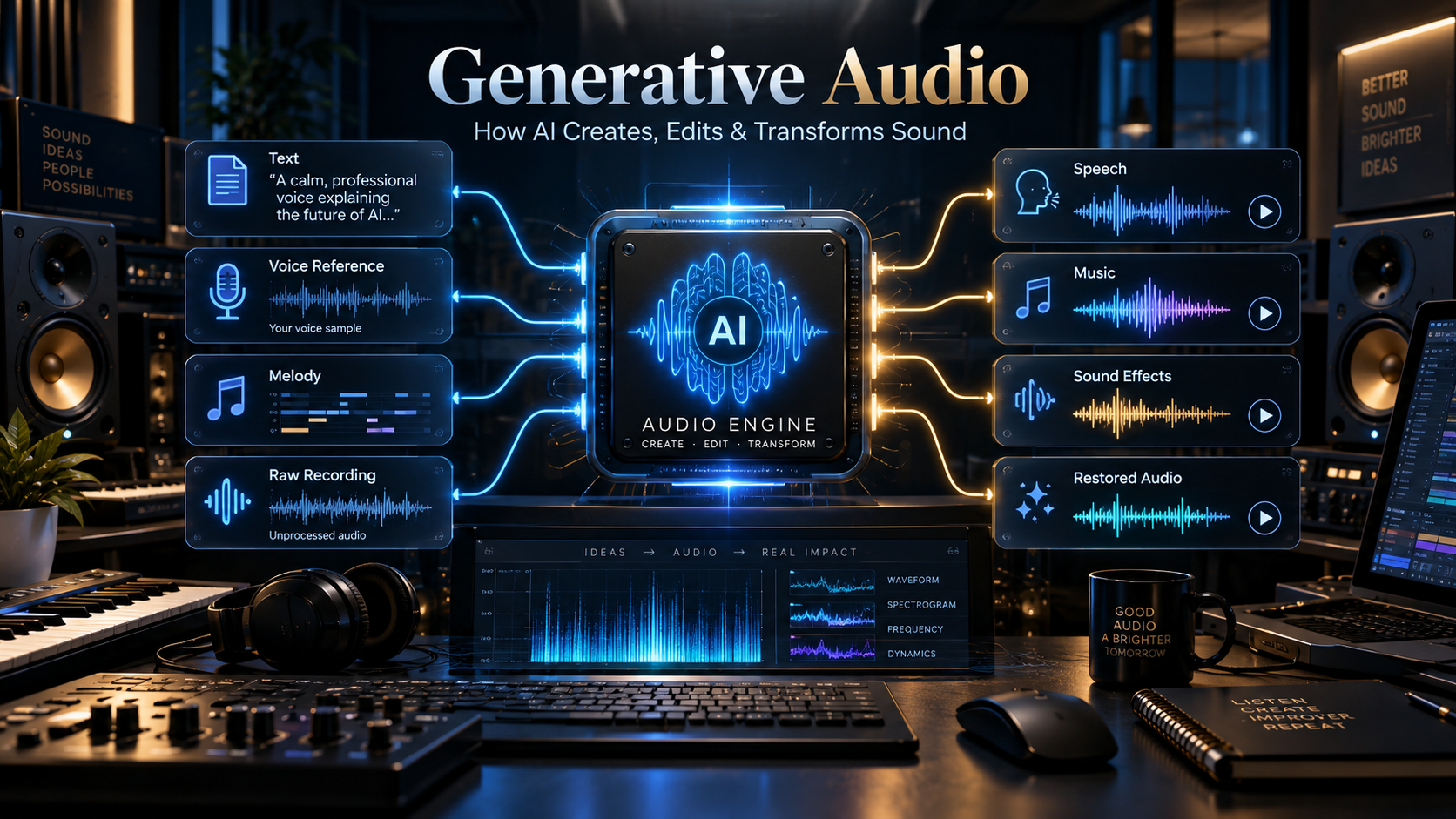
Generative Audio Explained: How AI Creates, Edits and Transforms Sound

October 14, 2026September 9, 2026 by Muntasir Ahmad Chowdhury
Generative audio AI transforming text, voice, music and sound into digital audio

Generative audio uses AI to create, transform and restore speech, music, sound effects and recordings. Learn how the technology works, what it costs, where it succeeds, and why provenance is becoming the industry’s biggest challenge.
Categories AI Explained

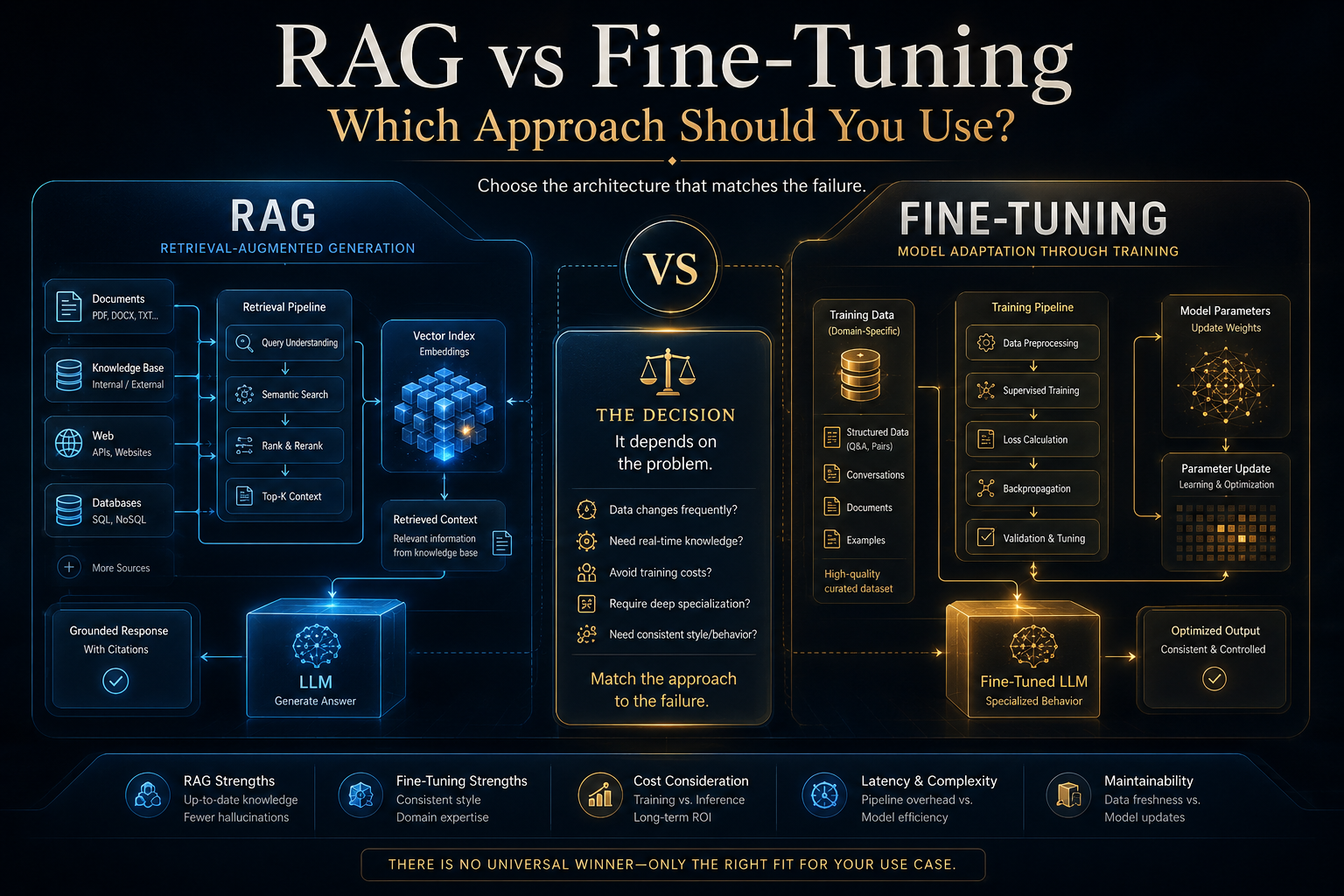
RAG vs Fine-Tuning: Which Approach Should You Use?

October 7, 2026September 2, 2026 by Muntasir Ahmad Chowdhury
RAG vs fine-tuning comparison showing external knowledge retrieval versus model behavior adaptation

RAG is usually the better choice when an AI system needs current, private, or externally sourced information; fine-tuning is better suited to stable specialized behavior, and both can be combined when an application needs current knowledge plus consistent task-specific behavior.
Categories AI Explained

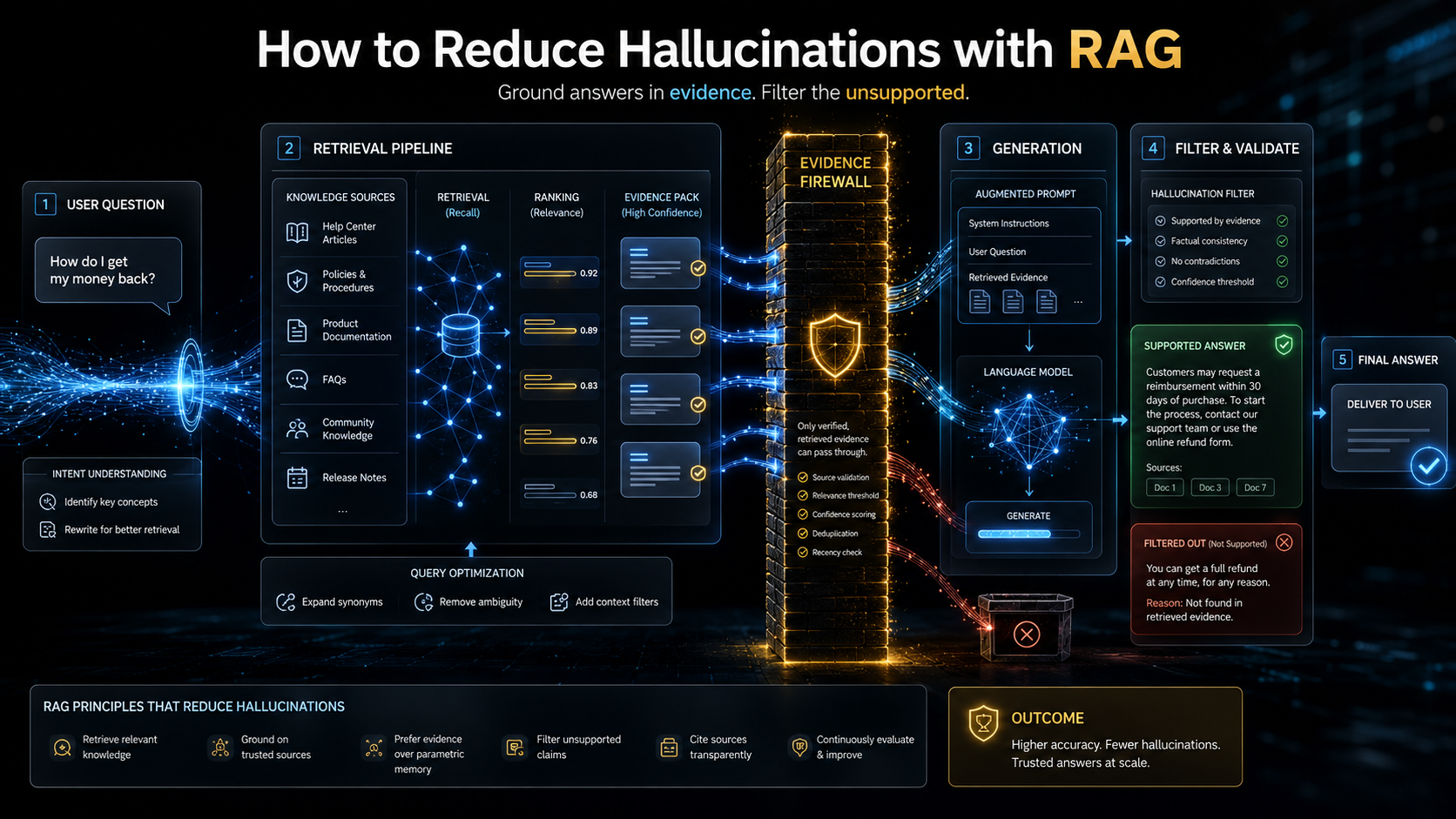
How to Reduce Hallucinations with RAG: A Practical Guide

October 7, 2026September 2, 2026 by Muntasir Ahmad Chowdhury
RAG hallucination reduction workflow showing evidence retrieval, grounding and verification before AI generates an answer. How to Reduce Hallucinations with RAG

A RAG system can still hallucinate when the correct passage is not retrieved, the retrieved context is incomplete, the source is outdated, or the model generates claims that go beyond the supplied evidence.
Categories AI Explained, AI Guides

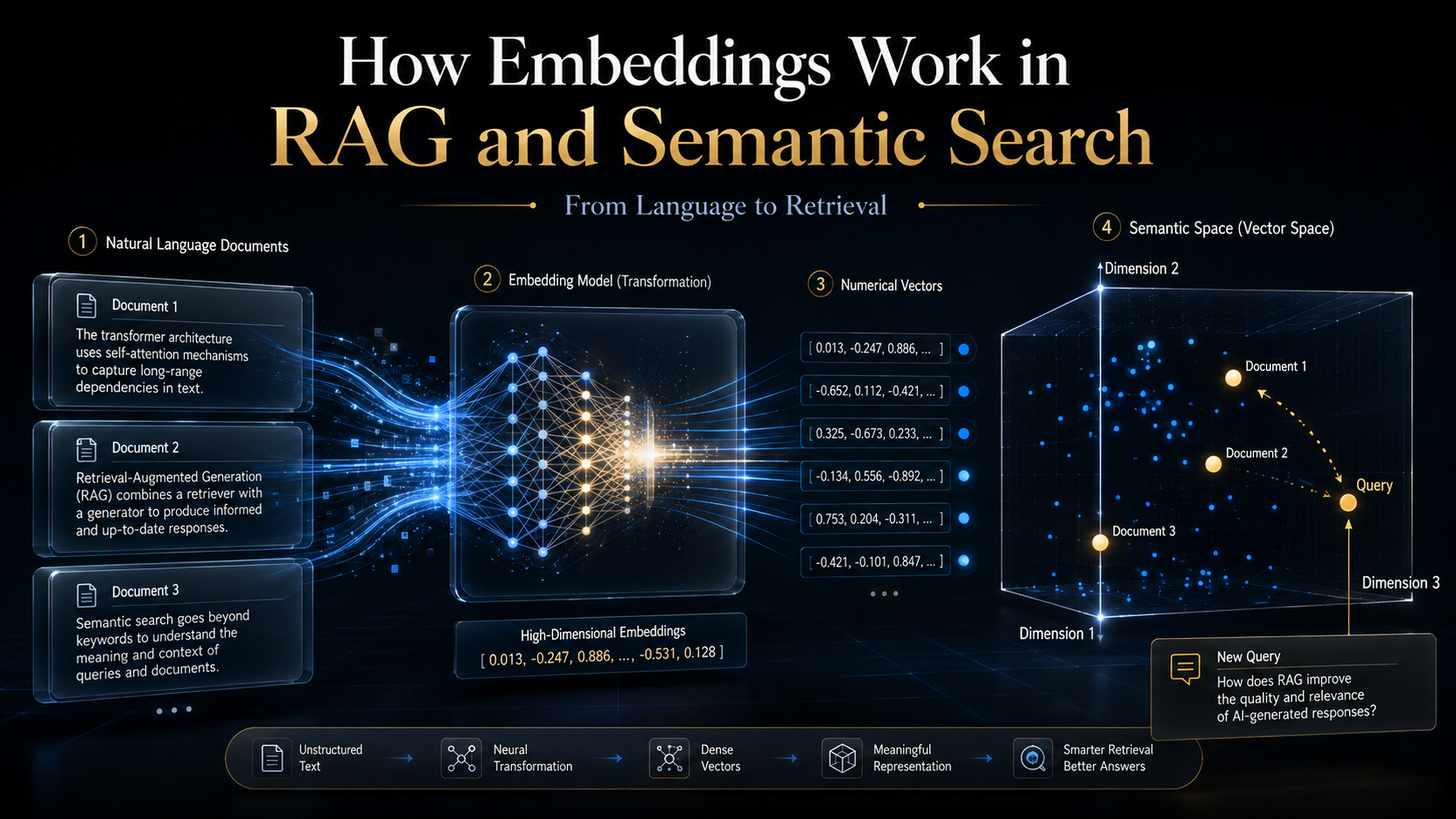
How Embeddings Work in RAG and Semantic Search

October 7, 2026September 2, 2026 by Muntasir Ahmad Chowdhury
How embeddings work in RAG: text converted into vectors for semantic search

Embeddings are the numerical representations that help RAG and semantic search systems find information by meaning rather than exact keyword matches. Here’s how they work, where they fail, and how to build better retrieval.
Categories AI Explained

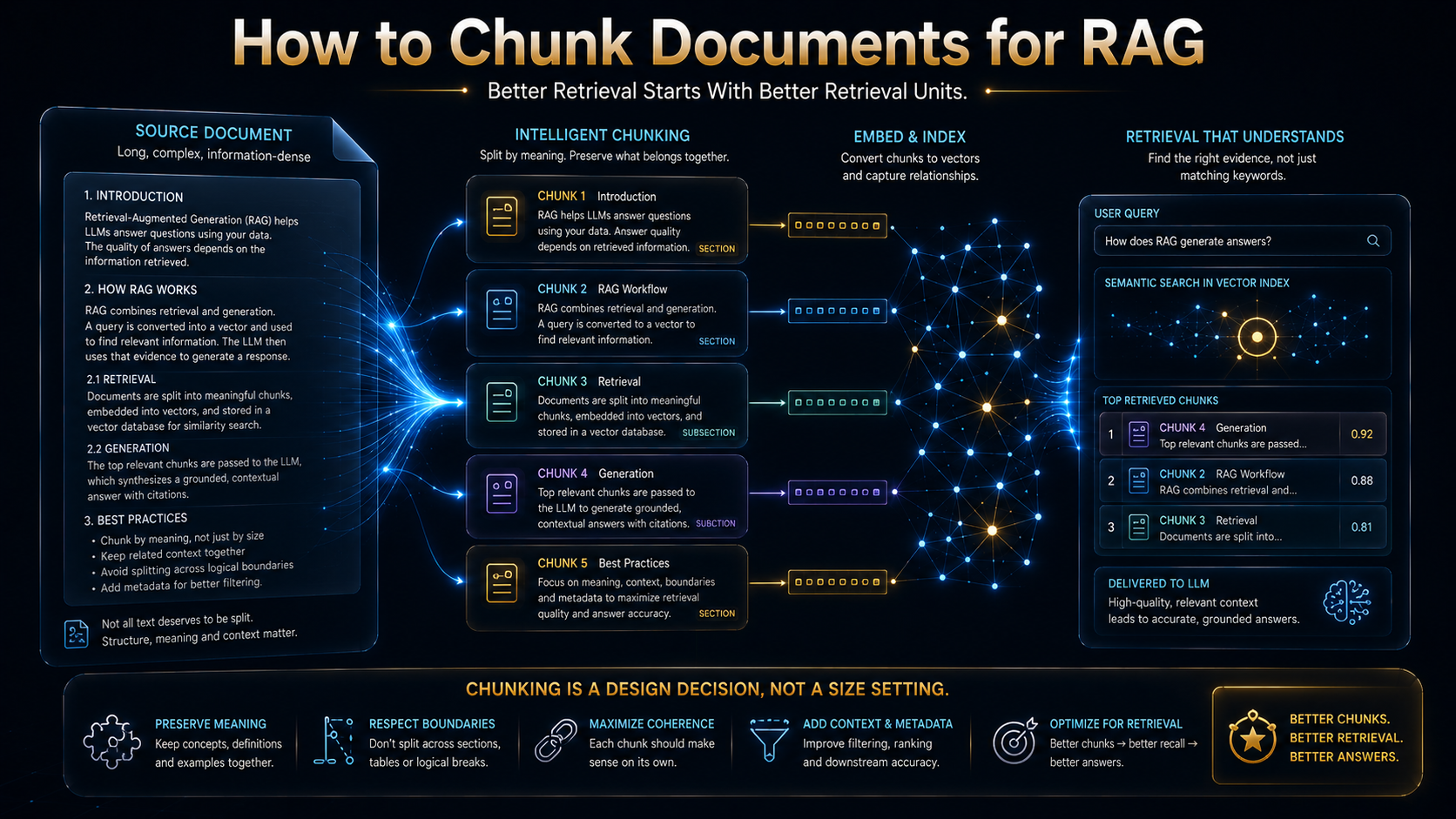
How to Chunk Documents for RAG: Strategies for Better Retrieval

October 7, 2026September 1, 2026 by Muntasir Ahmad Chowdhury
How to chunk documents for RAG and improve retrieval quality

Document chunking determines what a RAG system can retrieve. Learn how to choose chunk boundaries, preserve context, compare chunking strategies, and evaluate retrieval quality.
Categories AI Explained, AI Guides

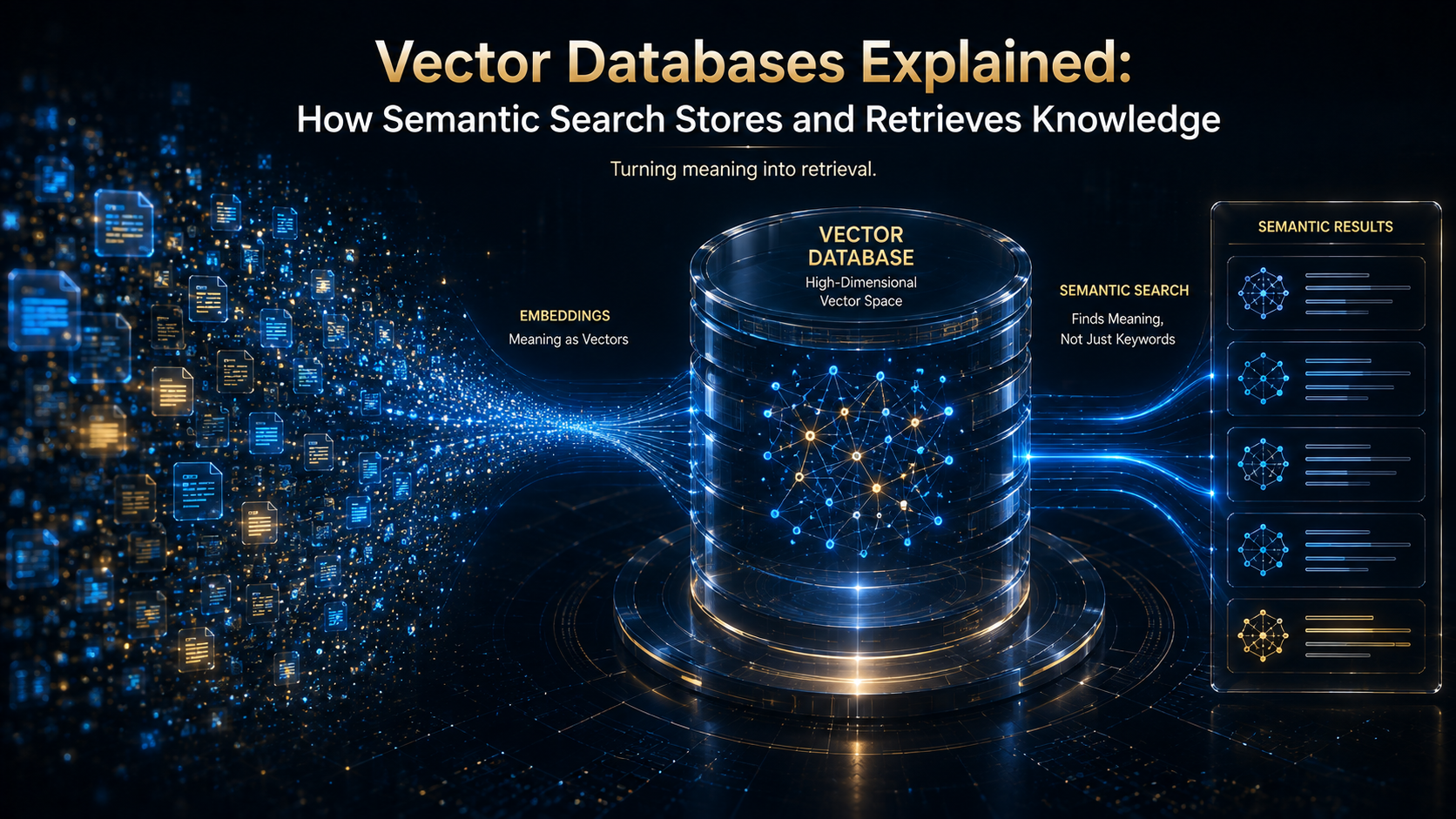
Vector Databases Explained: How Semantic Search Stores and Retrieves Knowledge

October 7, 2026September 1, 2026 by Muntasir Ahmad Chowdhury
Conceptual illustration of a vector databases connecting AI embeddings to semantic search results.

Vector databases are retrieval systems designed to search information by similarity and meaning. Learn how embeddings, indexes, filtering and vector search work together in semantic search and RAG.
Categories AI Productivity, AI Explained

Complete Guide to Retrieval-Augmented Generation (RAG)

October 7, 2026September 1, 2026 by Muntasir Ahmad Chowdhury
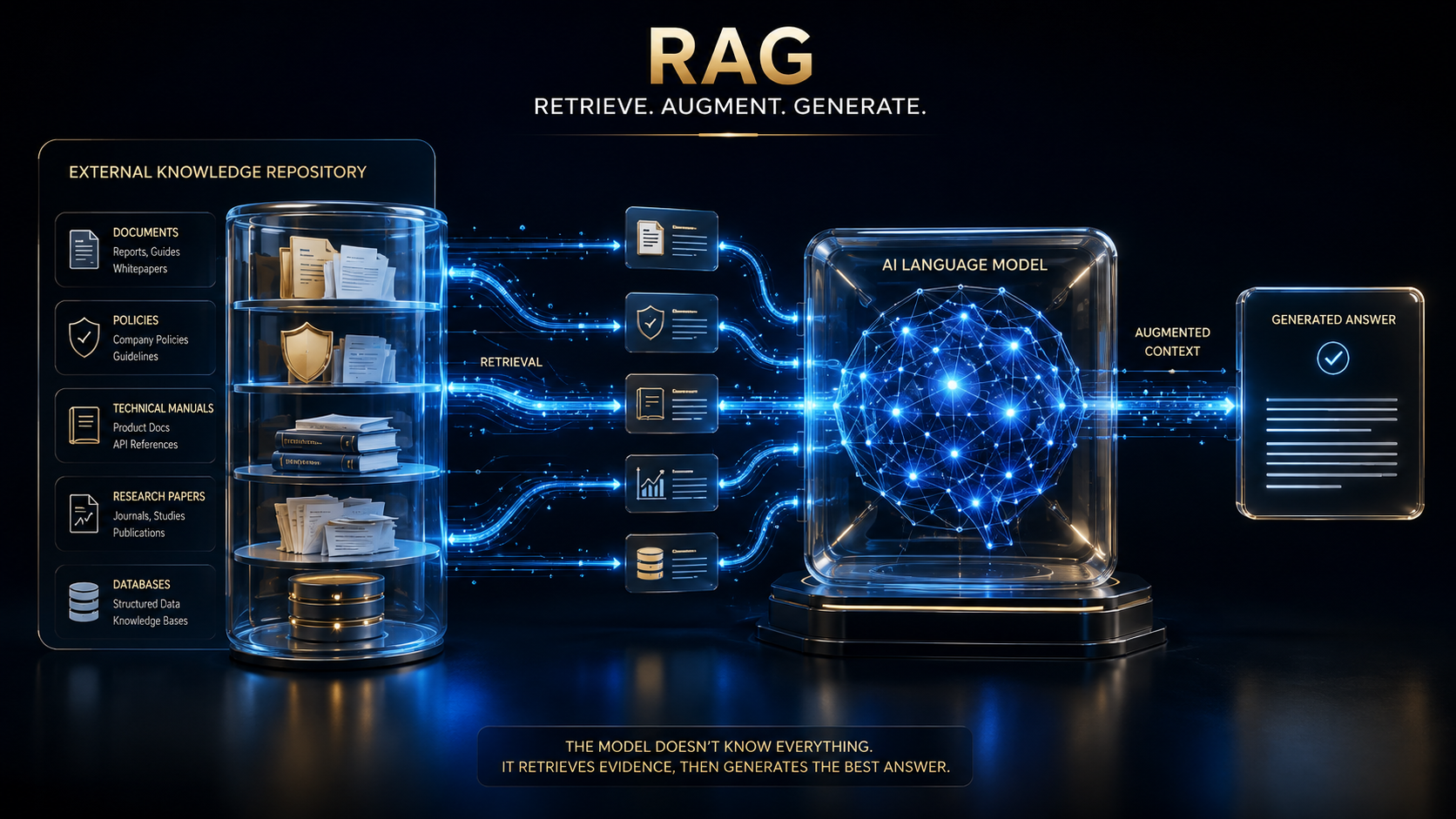
Retrieval-Augmented Generation connecting an AI language model to external knowledge sources

Retrieval-Augmented Generation (RAG) connects language models to external knowledge so they can retrieve relevant information before generating an answer. This guide explains the architecture, workflow, retrieval process, use cases, limitations, evaluation and production considerations behind reliable RAG systems.

Categories AI Guides, AI Explained

How AI Chatbots Work: From User Message to Intelligent Response

October 7, 2026August 3, 2026 by Muntasir Ahmad Chowdhury
AI chatbot architecture showing a user message moving through context, retrieval, tools, model inference and response generation. How AI Chatbots Work

Ever wondered what happens after you press Send? This guide explains how AI chatbots process messages, build context, retrieve information, use tools, generate responses and handle failures.

Categories AI Explained, AI Productivity
Older posts
Newer posts
← Previous Page1 Page2 Page3 Next →

AI Hustle World

Practical, research-backed guides and honest reviews of AI tools, to help you decide what is worth using.

Explore

  • Home
  • AI Tools
  • AI Explained
  • AI Guides
  • AI Productivity
  • AI Business

Company

  • About Us
  • Contact Us
  • Editorial Policy
  • Research & Testing Methodology
  • AI Tool Pricing Database
  • Affiliate Disclosure
  • Corrections Policy
  • Privacy Policy
  • Disclaimer
  • Terms & Conditions

Categories

  • AI Coding
  • AI Content Repurposing
  • AI Cybersecurity
  • AI for E-Commerce
  • AI Governance & Safety
  • AI in Finance
  • AI in HR
  • AI Legal & Contract Intelligence
  • AI Product Management
  • Make Money With AI
  • Prompt Engineering

© 2026 AI Hustle World. All rights reserved.

© 2026 AI Hustle World • Built with GeneratePress